



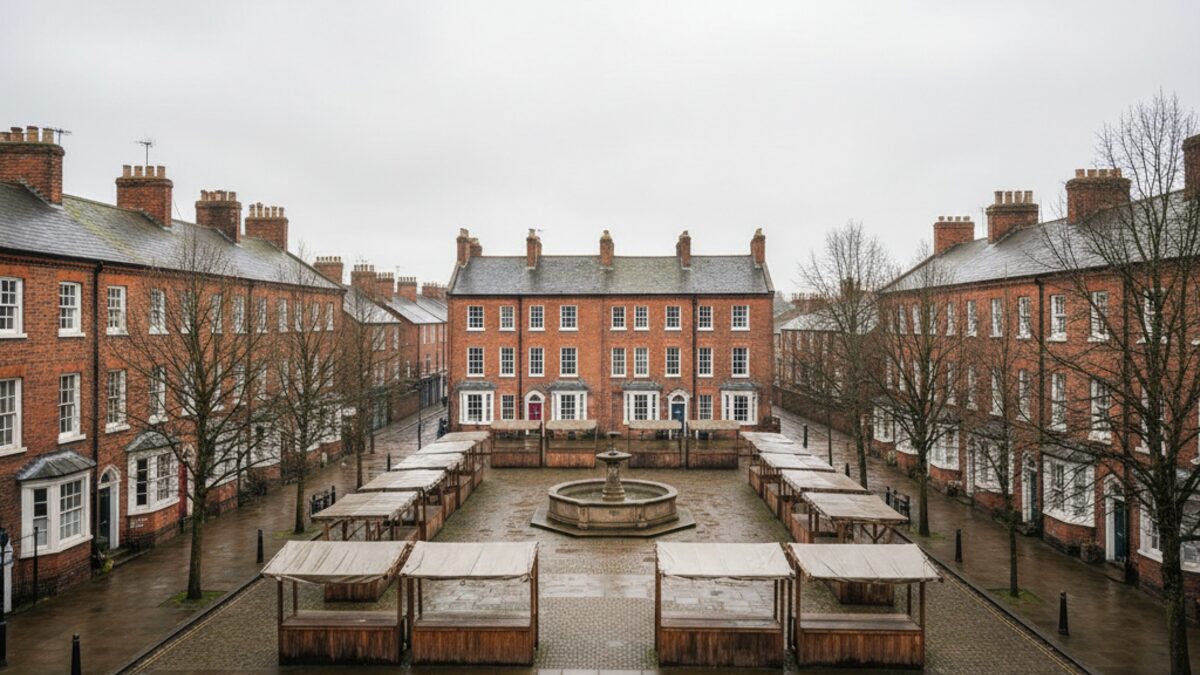
Leicester, a city of contrasts, stretches from its medieval core out to the rolling countryside of Rutland. Its 26 postcode districts house over a million people, and the price of a home tells a story of two worlds: the urban centre where a flat can be had for under £150,000, and the leafy edge where properties fetch nearly three times that. This is Leicester in postcodes, from the Rutland edge to the city.
At a Glance
Leicester at a glance
- Population: about 1,085,679
- Postcode districts: 26
- Average sale price: £301,468 (-14% vs the England and Wales average)
- Schools rated Outstanding: 7.6% (23 of 303)
The Leicester postcode area covers the city and its commuter hinterland. Across its 26 districts live an estimated 1,085,679 people. The average sale price in the area is £301,468, which is 14 per cent below the England and Wales average. At the extremes, the most expensive district is LE15 (Oakham) at £409,000, while the cheapest is LE1 (Leicester city centre) at £144,837. The gap between them is about 2.8 times. Deprivation, measured by the Index of Multiple Deprivation, averages a decile of 6.3 out of 10, meaning the area is slightly less deprived than England as a whole, though it ranges from a very deprived 3 to a comfortable 9. Of the 303 Ofsted-rated schools in the area, 7.6 per cent hold the top grade of Outstanding.
The Property Divide
| Postcode district | Average price | |
|---|---|---|
| Most expensive district | LE15 (Oakham) | £409,000 |
| Least expensive district | LE1 (Leicester) | £144,837 |
The property market in Leicester is split between the affordable city districts and the pricier rural and suburban ones. The cheapest district, LE1, covers the city centre and its immediate surrounds. Here, flats and smaller terraces dominate, with an average price of £144,837. That is less than half the area average. At the other end, LE15 (Oakham) sits in the county of Rutland, on the eastern edge of the postcode area. Its average of £409,000 reflects the demand for country homes, larger houses and good schools. The gap between the dearest and cheapest districts is a factor of 2.8, a moderate spread compared to some other English cities. Between these extremes, districts like LE2 (south Leicester) and LE3 (west Leicester) offer prices closer to the area average, while LE7 (Thurcaston, Cropston) and LE8 (Glen Parva) push towards the upper end. The pattern is clear: as you move out from the city centre, prices rise steadily, with the biggest jumps occurring once you cross into the villages and market towns that surround Leicester.
Rich and Poor
Leicester's deprivation profile is a mixed picture. The average Index of Multiple Deprivation decile across its postcode districts is 6.3, meaning the area as a whole is slightly better off than the English average. But that average hides a wide range. The most deprived district, with a decile of 3, is likely to be LE1 or a part of LE2, where inner-city poverty, unemployment and poor housing are concentrated. The least deprived district, at decile 9, is probably LE15 (Oakham) or another affluent suburb such as LE7. This range of six deciles is considerable, reflecting the sharp social divide between the city's poorer wards and its prosperous commuter belt. The city centre and inner suburbs bear the brunt of deprivation, while the outer districts enjoy lower crime, better health and higher incomes. The contrast is visible in the housing stock: Victorian terraces and council estates in the inner ring, detached homes and large gardens on the periphery.
Schools
Education in the Leicester postcode area is a patchwork. There are 303 schools rated by Ofsted, and only 7.6 per cent of them achieve the top grade of Outstanding. That is a low proportion compared to many other parts of England. The majority of schools are rated Good, but a significant minority are Requires Improvement or Inadequate. The best performing schools tend to be in the more affluent outer districts, such as LE15 and LE7, where parents can afford to buy into catchment areas. In the inner city, schools often struggle with higher levels of deprivation and pupil mobility. The lack of Outstanding schools in the centre is a concern for families who cannot afford to move to the suburbs. However, there are some notable exceptions, and the local authority has been working to raise standards. For parents choosing a postcode, the school ratings are a key factor, and the data shows that the quality of education varies sharply from one district to the next.
The Bottom Line
Leicester in postcodes is a city of two halves. The urban core offers cheap housing but higher deprivation and fewer top-rated schools. The edge, particularly around Oakham and the Rutland border, offers the opposite: expensive homes, low deprivation and better schools. The average price is below the national average, making Leicester relatively affordable for buyers, but the gap between the cheapest and dearest districts is wide. For anyone moving to the area, the choice is clear: pay a premium for the countryside and school catchment, or save money and accept the challenges of inner-city life. The postcode you pick will shape your experience of Leicester, from your commute to your children's education. The numbers tell the story: a city that is neither rich nor poor, but sharply divided within its own boundaries.