



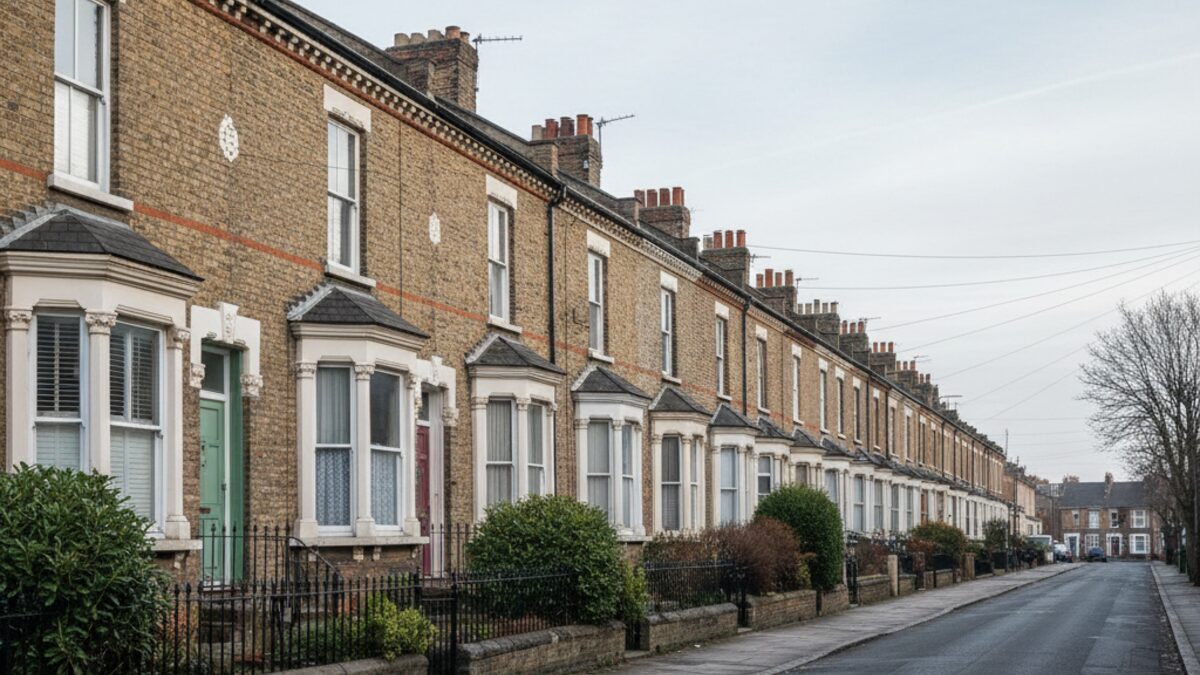
The front path, the spare bedroom, the mortgage-free retirement: owning a home has long been part of the British dream. But the Census 2021 data on housing tenure, published by the Office for National Statistics and aggregated here to postcode areas, shows just how unevenly that dream is distributed. In some corners of England and Wales, more than seven in ten households own their home. In others, well over half are renting.
The National Picture
Across England and Wales, 62.5% of households own their home, either outright or with a mortgage. That leaves 37.5% renting from a private landlord, a council, or a housing association. The national figure is a useful anchor, but it obscures a geography of ownership that is as much about postcode as it is about income.
Where Owners Dominate
At the top of the ownership table sits Crewe, with the CW postcode area recording 71.9% owner-occupancy. It is a reminder that the traditional industrial towns of the north and Midlands, with lower house prices and older housing stock, remain strongholds of home ownership. Bromley (BR) follows at 70.9%, a suburban London outlier where semi-detached houses and commuter belts keep the ownership rate high. Lancaster (LA) and Stockport (SK) both reach 70.6%, tying for third and fourth place. These are areas where a decent salary and a bit of saving can still secure a front door of your own.
| Postcode area | Owned homes | Households |
|---|---|---|
| CW (Crewe) | 71.9% | 147,042 |
| BR (Bromley) | 70.9% | 128,999 |
| LA (Lancaster) | 70.6% | 146,680 |
| SK (Stockport) | 70.6% | 271,997 |
| GU (Woking) | 70.5% | 309,279 |
| HG (Harrogate) | 70.5% | 62,466 |
| KT (Epsom) | 70.4% | 225,081 |
| PR (Preston) | 70.2% | 235,091 |
Where Renting Rules
The picture flips dramatically when you look at the bottom of the list. Every single postcode area where renting is most common is in London. The E postcode (East London) has the lowest ownership rate in England and Wales at just 35.4%. That means nearly two-thirds of households are renting. The W postcode (West London) is not far behind at 36.5%, followed by NW (North West London) at 37.1% and SE (South East London) at 39.7%. All six London postcode areas with single-letter prefixes — E, W, NW, SE, N and SW — sit near the bottom of the national table. The capital is a city of tenants.
| Postcode area | Owned homes | Households |
|---|---|---|
| E (London) | 35.4% | 411,449 |
| W (London) | 36.5% | 232,404 |
| NW (London) | 37.1% | 231,535 |
| SE (London) | 39.7% | 443,082 |
| N (London) | 40.3% | 355,963 |
| SW (London) | 42.2% | 384,407 |
| M (Manchester) | 50.3% | 520,375 |
| UB (Southall) | 51.9% | 138,452 |
Why The Gap
The gap between Crewe and East London is not a mystery. House prices in London have soared far beyond the reach of average earnings, forcing even well-paid professionals into the rental market. In Crewe and Lancaster, a typical home costs a fraction of a London flat. The data also reflects the different age and household structures: London has more young adults, more single-person households and more recent arrivals, all groups more likely to rent. Meanwhile, places like Bromley and Stockport have a higher proportion of older households who have paid off their mortgages, and a housing stock that includes more semi-detached and terraced houses suited to owner-occupation.
What It Means
These figures are not just a snapshot of housing tenure; they are a map of economic inequality and generational divides. In areas where renting is the norm, households have less security, less ability to build equity, and less control over their living costs. The concentration of renting in London creates a political and social dynamic very different from the owner-occupied suburbs and market towns. For policymakers, the message is stark: the national average of 62.5% ownership hides a country where the tenure you live in depends heavily on where you live. Closing that gap would mean not just building more homes, but building them in the right places, at prices that people on ordinary incomes can afford. Until then, the postcode remains the strongest predictor of whether you own your home or pay rent on someone else's.