


Devon is a county of contrasts, where the rugged moors meet the sea and the cost of a home can swing from the modest to the magnificent. With a population of about 1,321,054 spread across 67 postcode districts, it is a place where the names of its largest towns Hele, Ford, Stowford, Preston, Bickington, and Heath Cross suggest a landscape of small communities rather than sprawling cities. Yet the numbers tell a story of division, from the sparkling waters of Salcombe to the urban edge of Plymouth.
At a Glance
Devon is home to roughly 1,321,054 people living across 67 postcode districts. Its average property sale price is £323,274, which is 7% below the England and Wales average, making it a relatively affordable corner of the country. The most expensive district is TQ8 (Salcombe) at £959,279, while the cheapest is PL4 (Plymouth) at £197,619, a gap of about 4.9 times. Deprivation, measured by the Index of Multiple Deprivation, averages a decile of 5.3 out of 10 (where 1 is most deprived and 10 is least), with a range from 3 to 8 across its districts. Of its 414 Ofsted rated schools, 5.6% hold the top grade of Outstanding.
Devon at a glance
- Population: about 1,321,054
- Postcode districts: 67
- Average sale price: £323,274 (-7% vs the England and Wales average)
- Schools rated Outstanding: 5.6% (23 of 414)
The Property Divide
The property market in Devon is a tale of two extremes. At the top end, TQ8 (Salcombe) commands an average sale price of £959,279, a figure that reflects its coastal desirability and limited supply. At the other end, PL4 (Plymouth) offers an average of just £197,619, making it the most affordable district in the county. This creates a gap of about 4.9 times, meaning a home in Salcombe costs nearly five times what you would pay in the heart of Plymouth.
| Postcode district | Average price | |
|---|---|---|
| Most expensive district | TQ8 (Salcombe) | £959,279 |
| Least expensive district | PL4 (Plymouth) | £197,619 |
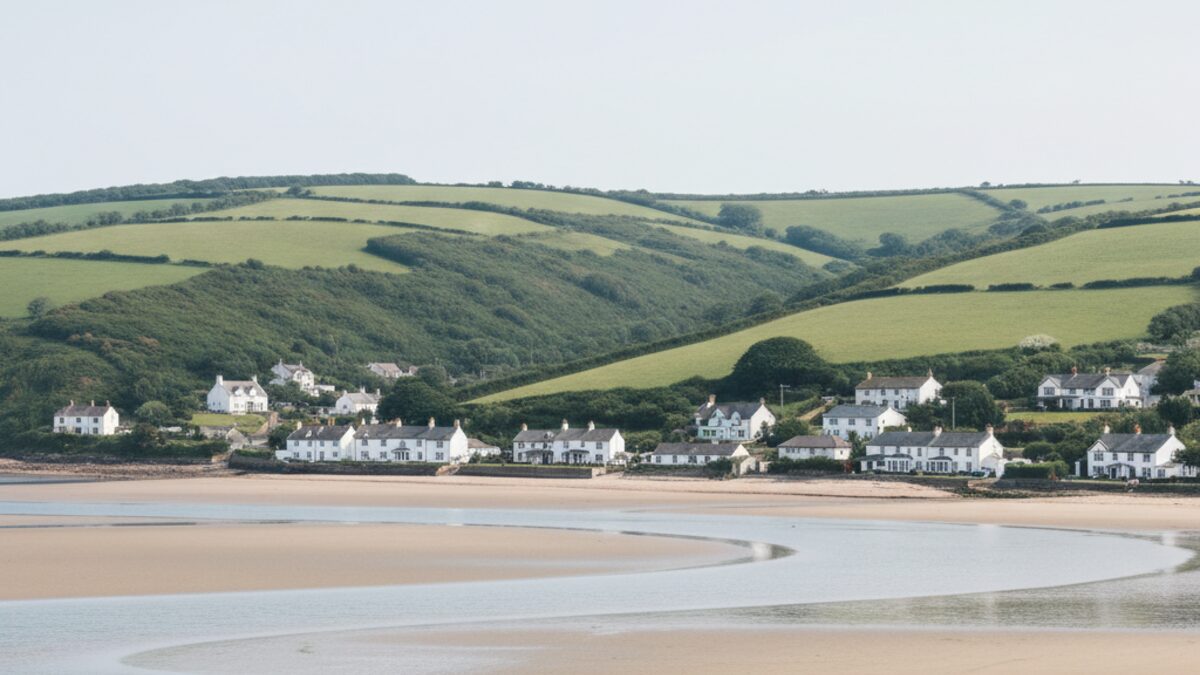
This divide is not just about location but about lifestyle. Salcombe, with its estuary views and sailing culture, draws buyers seeking a slice of Devon's glamour. Plymouth, a city shaped by its maritime and naval history, offers more accessible prices for first-time buyers and families. The gap between the dearest and cheapest districts is one of the widest in the South West, highlighting how Devon's property market is split between a premium coastal enclave and a more modest urban core. For the average buyer, this means that where you choose to live in Devon can dramatically alter your budget, from nearly a million pounds to under two hundred thousand.
Rich and Poor
Devon's wealth is as uneven as its property prices. The average Index of Multiple Deprivation decile across its districts is 5.3, placing it right in the middle of the scale. But this average hides a range from 3 to 8, meaning some areas are among the most deprived in England while others enjoy relative affluence. A decile of 3 indicates high levels of poverty, poor health, and limited access to services, while a decile of 8 suggests better opportunities and higher incomes.
The most expensive district, TQ8 (Salcombe), is likely to sit at the higher end of this scale, given its property values and appeal to wealthier residents. In contrast, PL4 (Plymouth) with its lower house prices may fall closer to the bottom, reflecting the challenges of an urban centre where deprivation is more concentrated. This divide echoes the property gap: the same forces that push up prices in Salcombe also concentrate advantage there, while Plymouth's affordability may come at the cost of greater social and economic hardship. The range of 3 to 8 across Devon's districts shows that the county is not uniformly prosperous, but a patchwork of rich and poor.
Schools
Education in Devon is a mixed picture. Of the 414 schools rated by Ofsted, only 5.6% hold the top grade of Outstanding. This is a relatively low proportion compared to some other parts of England, suggesting that while many schools are good, few are exceptional. The majority are likely rated Good or Requires Improvement, reflecting the challenges of a rural county with a scattered population.
The link between property prices and school quality is often strong, but here the numbers are less dramatic. The most expensive district, TQ8 (Salcombe), may attract families who can afford private education, but its Ofsted-rated schools are not necessarily the highest performing. Meanwhile, Plymouth, with its cheaper homes, might offer a wider range of state school options. With only 5.6% of schools Outstanding, parents in Devon may need to look carefully at individual schools rather than rely on district averages. The county's educational landscape is one where excellence is rare, but consistent provision is the norm.
The Bottom Line
Devon offers a lifestyle that many envy, but the numbers reveal a county of sharp contrasts. The property divide between Salcombe's near-million pound average and Plymouth's sub-200,000 price tag is a clear marker of inequality, while deprivation scores range from middle to low, showing that prosperity is not evenly spread. Schools are solid but unspectacular, with only a handful rated Outstanding. For anyone considering a move to Devon, the key takeaway is that location is everything. Whether you are drawn to the coast or the city, the figures show that your budget and your quality of life will vary enormously. This is a place where the numbers tell a story of two Devons, side by side, but worlds apart.