



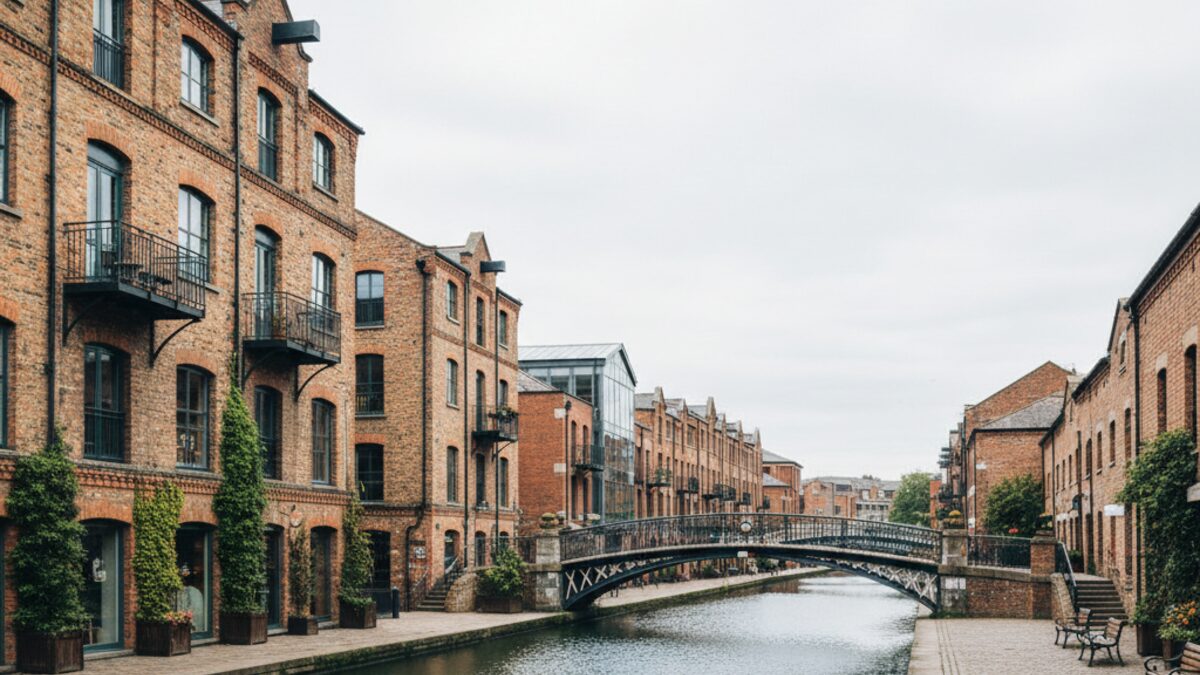
Stretching from the affluent fringes of Solihull to the industrial heart of Wolverhampton, the West Midlands county is a study in contrasts. It is home to more than three million people spread across 94 postcode districts, from Hall Green to Foleshill, Radford to Whitmore Park. The county's character shifts subtly from district to district: one minute you are in the leafy lanes of B94, the next in the tight terraces of WV1. Property prices, deprivation scores and school ratings all tell a story of a region that is neither uniformly prosperous nor uniformly struggling, but something far more complex.
At a Glance
West Midlands at a glance
- Population: about 3,051,871
- Postcode districts: 94
- Average sale price: £264,720 (-24% vs the England and Wales average)
- Schools rated Outstanding: 12.8% (121 of 943)
The West Midlands county has a population of roughly 3,051,871. Its average house price is £264,720, a figure 24 per cent below the England and Wales average. At the top end, the B94 district in Solihull commands an average of £685,742; at the bottom, Wolverhampton's WV1 averages just £160,525. The average deprivation decile across the county is 4.1 out of 10, with scores ranging from 1 to 9. Of 943 Ofsted rated schools, 12.8 per cent hold the top grade of Outstanding. These figures come from the Office for National Statistics, HM Land Registry, the English Indices of Deprivation and Ofsted.
The Property Divide
| Postcode district | Average price | |
|---|---|---|
| Most expensive district | B94 (Solihull) | £685,742 |
| Least expensive district | WV1 (Wolverhampton) | £160,525 |
The gap between the county's most expensive and cheapest postcode districts is stark. Solihull's B94 averages £685,742, while Wolverhampton's WV1 sits at £160,525. That is a ratio of about 4.3 to one. In cash terms, the difference is more than half a million pounds. For the price of a typical home in B94, you could buy four in WV1 and still have change for a new car. This chasm reflects not just housing stock but the underlying economics: Solihull has long attracted buyers seeking good schools and green space, while Wolverhampton's post-industrial legacy keeps values lower. Between these extremes lie districts such as B91 (Solihull town centre) and CV6 (Foleshill), each with their own local dynamics. Average prices across the county as a whole are pulled down by the cheaper western districts, but the premium of B94 shows that pockets of the West Midlands are among the most expensive in the region outside London.
Rich and Poor
The Index of Multiple Deprivation tells a similar story of inequality. The average decile across the county's districts is 4.1, meaning the typical postcode is more deprived than the median for England. But the range runs from 1 (most deprived) to 9 (least deprived). Some districts, particularly in inner-city Birmingham and Wolverhampton, rank in the bottom few deciles, struggling with low income, poor health and high crime. Others, especially in Solihull and parts of south Birmingham such as Hall Green, reach deciles 7, 8 or 9. The county contains both extremes within a single drive. The deprivation data is England only, but it captures the lived reality of a region where a postcode can determine life chances. The most affluent areas are not immune to deprivation, and the poorest are not without strengths, but the numbers show a county where geography and wealth are tightly linked.
Schools
Of the 943 schools in the West Midlands county rated by Ofsted, 12.8 per cent have achieved Outstanding. That is a respectable share, though not exceptional by national standards. The distribution of these top-rated schools tends to follow the property map. Solihull and its environs boast a higher concentration of Outstanding primaries and secondaries, while Wolverhampton and parts of Coventry have more schools rated Requires Improvement or Inadequate. The connection is not absolute, but the correlation is strong: expensive areas attract and retain better teachers and resources. For families moving into the county, school performance is often the deciding factor between a district like B94 and a cheaper alternative. The 87 per cent of schools rated Good or Outstanding combined suggests that many pupils receive a decent education, but the gaps between areas remain a persistent concern.
The Bottom Line
The West Midlands county defies easy summary. It is neither a uniformly cheap region nor a uniformly poor one. Its average house price sits well below the England and Wales benchmark, yet it contains one of the most expensive outskirts in the Midlands. Its average deprivation is worse than the national median, but its best-off districts reach the top decile. The school system delivers a solid proportion of Outstanding ratings, but the quality varies sharply by postcode. For anyone considering a move here, the numbers underline the importance of choosing the right district. A few miles can separate a house costing four times as much from one that is more affordable, a school rated Outstanding from one that struggles, a neighbourhood in the top decile from one in the bottom. The West Midlands is a county of sharp edges, and the statistics capture every one of them. The key is to know which side of the line you want to be on.