



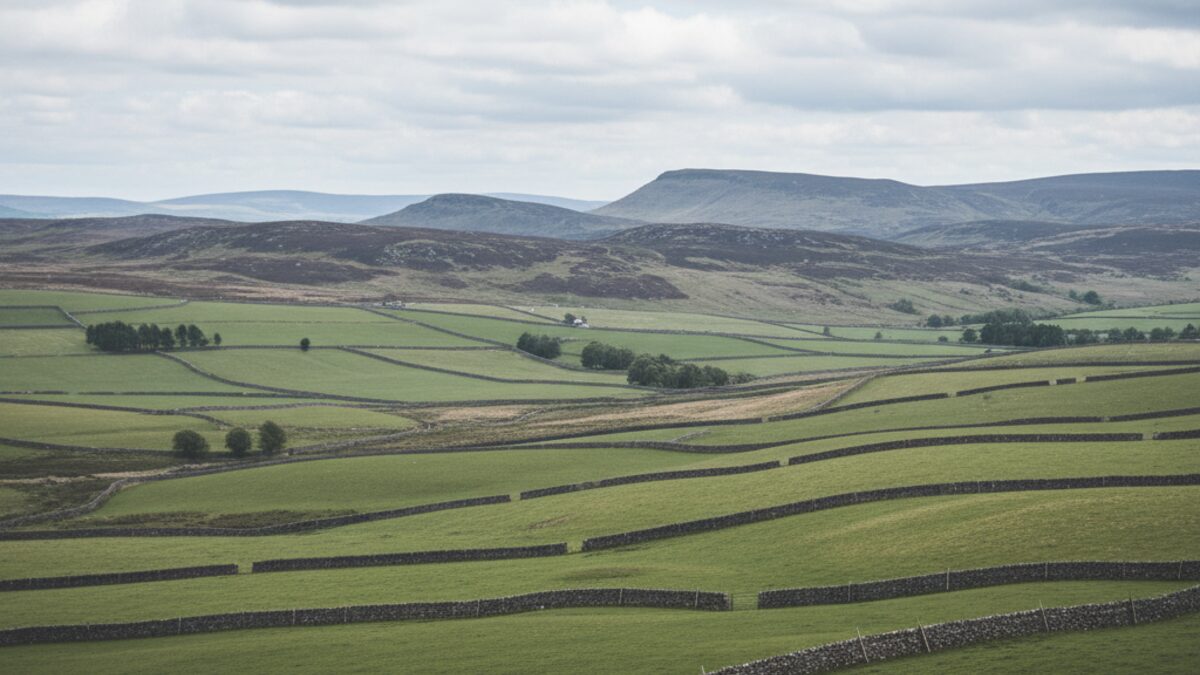
Lancashire is a county of contrasts, where the grit of industrial mills meets the bracing air of the coast and the wild emptiness of the moors. From Blackpool's Pleasure Beach to the Forest of Bowland, its postcode districts tell a story of both enduring charm and sharp economic divides. With a population approaching two million spread across 52 areas, Lancashire's numbers paint a picture of a place that is neither uniformly prosperous nor persistently deprived, but something altogether more nuanced.
At a Glance
Lancashire is home to roughly 1,922,303 people, spread across 52 postcode districts. Its largest settlements include Hall Green, Lane Ends, Brookhouse, Broadfield, West End and Ribbleton. The average property sold for £218,766 in the most recent Land Registry data, which is 37 per cent below the England and Wales average. The most expensive district is L37 (Liverpool), where average prices reach £381,514; the cheapest is FY1 (Blackpool) at £107,661. That is a gap of about three and a half times. Deprivation, measured by the Index of Multiple Deprivation, averages a decile of 5.2 out of 10, ranging from 2 (most deprived) to 8 (least deprived). Of 810 Ofsted-rated schools, 13.3 per cent hold the top grade of Outstanding.
Lancashire at a glance
- Population: about 1,922,303
- Postcode districts: 52
- Average sale price: £218,766 (-37% vs the England and Wales average)
- Schools rated Outstanding: 13.3% (108 of 810)
The Property Divide
The chasm between Lancashire's dearest and cheapest postcodes is wide enough to raise eyebrows. At the top end, L37 in Liverpool commands an average of £381,514; at the bottom, FY1 in Blackpool scrapes just £107,661. The difference is not merely a matter of a few thousand pounds but a factor of 3.5. This is not a gentle slope; it is a cliff. In L37, you might buy a three-bedroom Victorian terrace for the price of an entire street of terraces in FY1. The reasons are familiar: L37, covering Formby and surrounding areas, benefits from coastal desirability, good schools and commuter links to Liverpool. FY1, by contrast, is the heart of Blackpool, a seaside resort that has struggled with economic decline, low-wage seasonal work and a housing stock heavy with former holiday lets and bedsits.
| Postcode district | Average price | |
|---|---|---|
| Most expensive district | L37 (Liverpool) | £381,514 |
| Least expensive district | FY1 (Blackpool) | £107,661 |
The property divide reflects deeper structural forces. Lancashire's average house price of £218,766 is 37 per cent below the national average, meaning the county as a whole is relatively affordable. But that affordability comes at a cost: the cheapest areas are also the most deprived, and the gap between them and the priciest districts is not just about bricks and mortar but about opportunity, infrastructure and local economies.
Rich and Poor
Lancashire's average Index of Multiple Deprivation decile is 5.2, placing it almost exactly in the middle of the English scale. But that average masks a wide spread: the most deprived district ranks at decile 2 (in the bottom 20 per cent nationally), while the least deprived reaches decile 8 (in the top 20 per cent). This is a county where a postcode can shift a few miles and take you from struggling seaside terraces to comfortable suburban semis. The deprived pockets are concentrated in inner city areas like parts of Blackburn, Burnley and Blackpool, where low wages, poor health and limited access to services compound each other. The more affluent districts cluster in the commuter belt around Preston, the Ribble Valley and the western fringe of Greater Manchester. The two and a half decile gap between the richest and poorest parts of Lancashire is modest compared to some northern counties, but it still means that children growing up a few miles apart can face vastly different life chances.
Schools
Of the 810 Ofsted-rated schools in Lancashire, just 13.3 per cent achieve the top grade of Outstanding. That is a higher proportion than the national average of around 10 per cent, though still a minority. The county's schools are generally rated Good (the most common grade) or Requires Improvement, with a small number of Inadequate. The Outstanding schools are not evenly spread: they tend to be in the more affluent districts, reinforcing the link between property prices and educational opportunity. In L37, for example, several primary schools hold Outstanding grades, while in FY1 the proportion is lower. This is not a deterministic pattern, but it is a familiar one: where house prices are higher, school funding and parental engagement often follow. For families weighing up where to live, school quality is a powerful draw, and Lancashire's figures suggest that the best schools are largely found in the areas where property already costs more.
The Bottom Line
Lancashire by the numbers is a county of middling affluence and sharp local contrasts. It is cheaper than much of England and Wales, but that affordability is not evenly shared. The richest district is three and a half times more expensive than the poorest, and deprivation swings from a low of 2 to a high of 8 on the national scale. The schools, while better than average for Outstanding ratings, are clustered in the places where houses cost most. For anyone considering a move to Lancashire, the numbers tell a clear story: choose your postcode carefully. The coast, the mills and the moors all have their charms, but the arithmetic of property and opportunity does not treat every corner equally. In Lancashire, the picture is one of a county with a proud history, a mixed present, and a future that will depend on how honestly it addresses the gaps that its own statistics reveal.