



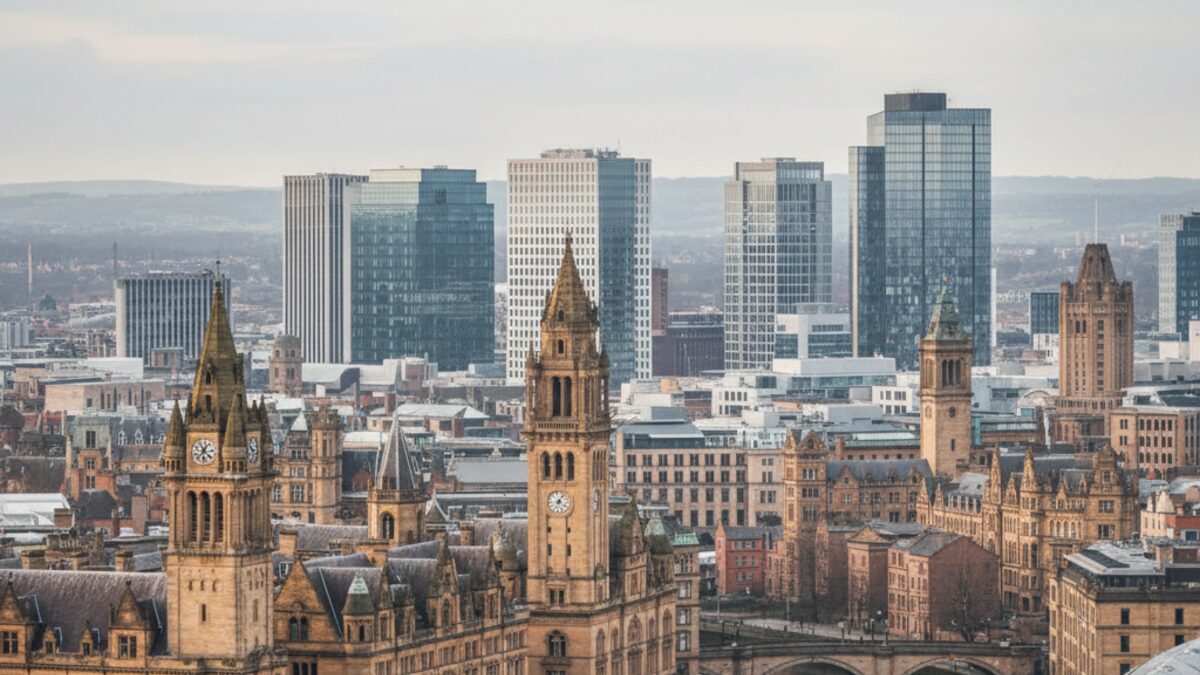
Leeds is a city of contrasts, a place where the prosperous market towns of the north and east rub shoulders with the industrial heartland of the south and west. From the stone-built affluence of Wetherby to the urban density of Beeston, the LS postcode area tells a story of Yorkshire's largest city in microcosm. It is a tale of two housing markets, two economies, and two very different ways of life, all bound together by the same local authority.
The city of Leeds, covering 32 postcode districts, is home to roughly 835,424 people. It is a sprawling urban area, but its postcodes capture a surprising diversity. The average house price across the whole area is £283,018, which is 19% below the average for England and Wales. That might sound like a bargain, but the figures hide a chasm between the cheapest and most expensive parts of the city.
At a Glance
Leeds at a glance
- Population: about 835,424
- Postcode districts: 32
- Average sale price: £283,018 (-19% vs the England and Wales average)
- Schools rated Outstanding: 13% (34 of 262)
Leeds is a postcode area (the city of Leeds). Population about 835,424 across 32 postcode districts. Average sale price £283,018, which is -19% relative to the England and Wales average (positive means more expensive). The most expensive district is LS22 (Wetherby) averaging £472,914; the cheapest is LS11 (Leeds) at £148,192, a gap of about 3.2 times. Deprivation: the average Index of Multiple Deprivation decile is 5.5 out of 10 (1 most deprived, 10 least), ranging from 2 to 9 across its districts. Of 262 Ofsted rated schools, 13% hold the top grade Outstanding. Sources: ONS population, HM Land Registry prices, English Indices of Deprivation, Ofsted. Property data covers England and Wales; deprivation and Ofsted are England.
The Property Divide
| Postcode district | Average price | |
|---|---|---|
| Most expensive district | LS22 (Wetherby) | £472,914 |
| Least expensive district | LS11 (Leeds) | £148,192 |
The property market in Leeds is a study in extremes. At the top end sits LS22, the Wetherby district, where the average home costs £472,914. This is a market town of considerable charm, with a historic racecourse and a reputation for fine dining and independent shops. Its properties are large, detached, and set in leafy streets. At the other end is LS11, which covers parts of central Leeds including Holbeck and Beeston. Here, the average sale price is just £148,192. The gap between them is about 3.2 times, meaning the average Wetherby home is worth more than three average homes in LS11.
This divide is not just about housing stock. It reflects the economic geography of the city. Wetherby and other northern districts like LS17 (Harewood) and LS21 (Otley) are commuter territory, drawing workers from the city centre and beyond. They have strong local economies, good schools, and plenty of green space. The southern and inner-city districts, such as LS11, LS10 (Middleton) and LS9 (Burmantofts), have a higher proportion of terraced housing, flats, and former industrial properties. These areas have historically been cheaper, and the gap has persisted even as Leeds has undergone a period of significant regeneration.
Rich and Poor
The property divide is mirrored in the Index of Multiple Deprivation, a government measure that combines income, employment, health, education, crime, and living environment. The average deprivation decile for the Leeds postcode area is 5.5 out of 10, where 1 is the most deprived and 10 is the least. That is a middling score, but the range is wide. The most deprived district in the city scores just 2 out of 10, while the least deprived scores 9 out of 10. That is a gulf of seven deciles, meaning some of the most disadvantaged communities in England live within a few miles of some of the most advantaged.
Wetherby and its neighbours sit comfortably in the top half of the deprivation scale. They have low unemployment, high educational attainment, and good access to services. In contrast, districts like LS11 and LS10 are among the most deprived in the country. These areas have higher rates of poverty, poorer health outcomes, and less access to green space. The city centre itself, LS1, is a mixed bag, with pockets of new luxury apartments alongside older, more deprived housing estates. This is not a simple north-south split, but a pattern of concentric rings and radial corridors of wealth and poverty.
Schools
Education is a key factor in the property market, and Leeds has a mixed picture. Of the 262 Ofsted-rated schools in the city, just 13% hold the top grade of Outstanding. That is below the national average, and it means that good school places are in high demand. The best-performing schools tend to cluster in the more affluent districts. Wetherby, for example, has a number of Outstanding primary schools, which helps to sustain its high house prices. In the inner city and southern districts, the proportion of Outstanding schools is much lower, and many schools are rated Good or Requires Improvement.
This educational divide reinforces the property divide. Families who can afford to live in the LS22 or LS17 postcodes have access to some of the best state schools in the region. Those in cheaper areas often have fewer choices, and the competition for places at the better schools can be fierce. It is a classic cycle: good schools push up house prices, which in turn makes it harder for lower-income families to access them.
The Bottom Line
Leeds is a city of two halves, but the halves are not neatly divided by a river or a motorway. The line between the affluent north and east and the poorer south and west is a blurred one, but it is unmistakable in the data. The average house price of £283,018 might seem reasonable, but it masks a market where a home in Wetherby costs three times as much as one in Beeston. The deprivation figures tell a similar story, with some of the most disadvantaged communities in England living within a short drive of some of the most prosperous.
This is not a city in decline. Leeds has a strong economy, a growing population, and a vibrant cultural scene. But the postcode lottery is real. Where you live in the LS area determines not just the value of your home, but your access to good schools, green space, and economic opportunity. For the city to thrive, it will need to bridge that gap. For now, the postcodes tell the truth: Wetherby and Beeston are both Leeds, but they are worlds apart.