



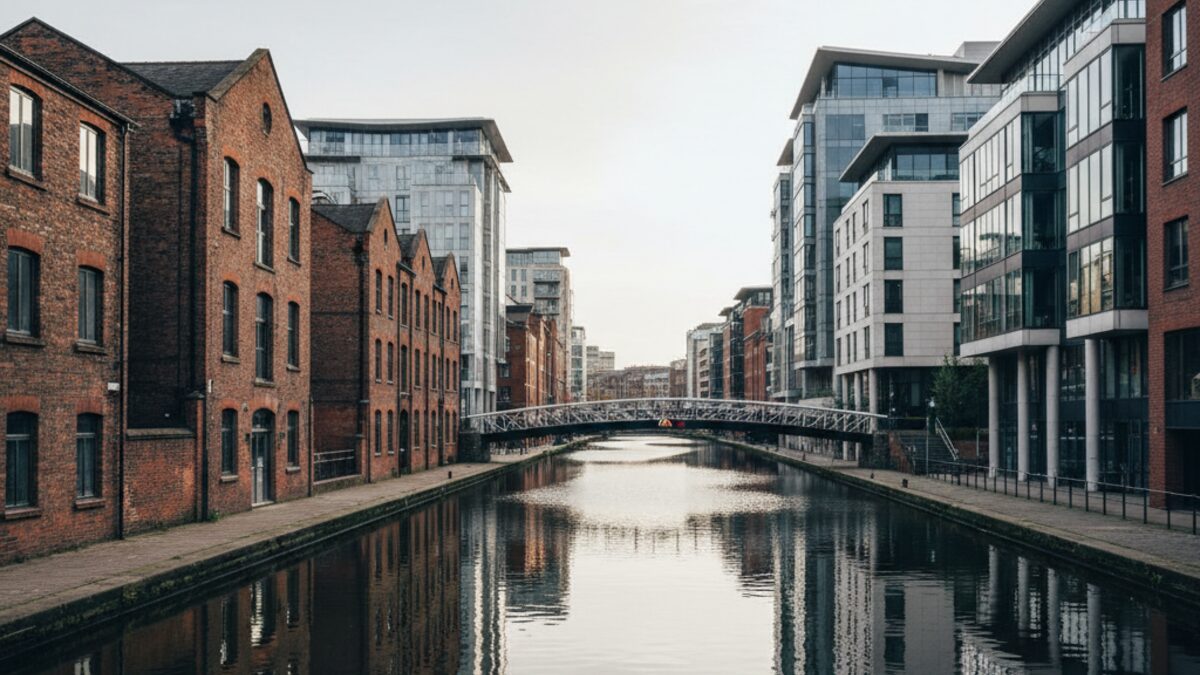
Birmingham. The name alone conjures up images of canals, the Bull Ring, and the unmistakable hum of a city that has spent centuries reinventing itself. But beyond the headline acts of the Jewellery Quarter and the Balti Triangle, the city tells a more granular story through its postcodes. From the leafy fringes of Solihull to the inner-city terraces of B6, the numbers reveal a metropolis of stark contrasts, surprising wealth, and persistent challenges. This is the Second City, not as a slogan, but as a set of statistics.
At a Glance
Birmingham is a postcode area covering the city of Birmingham itself. It is home to a population of approximately 2,029,280 people, spread across 78 postcode districts. The average sale price for a property in the area stands at £283,335, which is 19 per cent below the England and Wales average. The most expensive district is B94 (Solihull), where the average home costs £685,742. The cheapest is B6 (Birmingham), at £167,111. The average Index of Multiple Deprivation decile across the city is 4.4 out of 10, where 1 is most deprived and 10 is least. Of the 633 Ofsted rated schools in the area, 13.1 per cent hold the top grade of Outstanding.
Birmingham at a glance
- Population: about 2,029,280
- Postcode districts: 78
- Average sale price: £283,335 (-19% vs the England and Wales average)
- Schools rated Outstanding: 13.1% (83 of 633)
The Property Divide
The gap between the dearest and cheapest postcode districts in Birmingham is a chasm. At one end, B94 in Solihull offers an average property price of £685,742, a figure that reflects its status as a commuter belt haven with good schools and green space. At the other, B6, which covers parts of Aston and Nechells, averages just £167,111. That is a difference of about 4.1 times. To put it another way, a home in B94 costs more than four homes in B6.
This divide is not just about price tags. It maps onto a geography of opportunity. The most expensive districts tend to cluster on the city's southern and eastern edges, where the landscape opens up into the countryside of Warwickshire and Worcestershire. The cheapest are concentrated in the inner city, where Victorian terraces and post-war estates sit cheek by jowl with industrial relics. The property market here is a mirror of the city's history: the old manufacturing heartlands, now struggling, versus the aspirational suburbs that have long since left the smoke behind.
| Postcode district | Average price | |
|---|---|---|
| Most expensive district | B94 (Solihull) | £685,742 |
| Least expensive district | B6 (Birmingham) | £167,111 |
Rich and Poor
Property prices are one thing, but the Index of Multiple Deprivation tells a more human story. Birmingham's average decile of 4.4 out of 10 places it firmly in the more deprived half of England. The range across its districts is wide, from a decile of 1 (the most deprived) to 9 (the least deprived). That means within the same city, you can find neighbourhoods that are among the most disadvantaged in the country, and others that are among the most comfortable.
The geography of deprivation closely mirrors the property divide. The inner city and northern wards tend to score lower, while the southern and eastern suburbs score higher. This is not a simple tale of rich versus poor, but of a city where the postcode you are born into can shape your life chances. The gap between the richest and poorest districts is not just about money; it is about access to green space, to good schools, to jobs, and to health. Birmingham, for all its dynamism, remains a city of two halves.
Schools
Education is often the great leveller, and Birmingham has a mixed record. Of the 633 Ofsted rated schools in the area, 13.1 per cent hold the top grade of Outstanding. That is a respectable figure, but it hides a patchwork of quality. The best schools tend to cluster in the more affluent postcodes, where parents can afford to move into catchment areas. In the inner city, schools often face greater challenges, from higher levels of deprivation to larger class sizes.
The result is a system that reinforces the property divide. A family buying a home in B94 is not just paying for a house; they are paying for access to some of the best state schools in the region. In B6, the options are more limited. The postcode, in this sense, becomes a proxy for educational opportunity. It is a reminder that the numbers on a letter are never just about geography.
The Bottom Line
Birmingham is a city of numbers that tell a story of ambition and inequality. Its population of over two million makes it the largest local authority in the country, but its average house price is nearly a fifth below the national average. The gap between its richest and poorest postcodes is a factor of four, and its deprivation scores place it among the more challenged cities in England. Yet the city is also home to a thriving cultural scene, a growing tech sector, and a young, diverse population that is reshaping its future.
The postcodes of Birmingham are not just addresses. They are a map of the city's past, present, and possible future. The numbers show a place that is still working out how to spread its wealth more evenly, how to give every child a fair start, and how to build a city that works for everyone. The Second City has a long way to go, but the data is there to guide the way.