


Think of the street you grew up on. There is a good chance that somewhere, in a town you have never visited, there is another street with exactly the same name. We hold the street name for more than a million addresses across the country, so we counted every one of them. There are 353,508 distinct street names in Britain, but the top of the list is ruled by a very small club of names that appear thousands of times each.
The Count
Here are the fifteen most common street names in the country, ranked by how many postcodes sit on a road of that name.
| # | Street name | Postcodes on it |
|---|---|---|
| 1 | High Street | 14,810 |
| 2 | Station Road | 7,551 |
| 3 | Main Street | 4,630 |
| 4 | London Road | 4,549 |
| 5 | Church Street | 4,041 |
| 6 | Church Road | 3,786 |
| 7 | Church Lane | 3,336 |
| 8 | Mill Lane | 2,442 |
| 9 | Main Road | 2,340 |
| 10 | New Road | 2,312 |
The Most Common Street Name
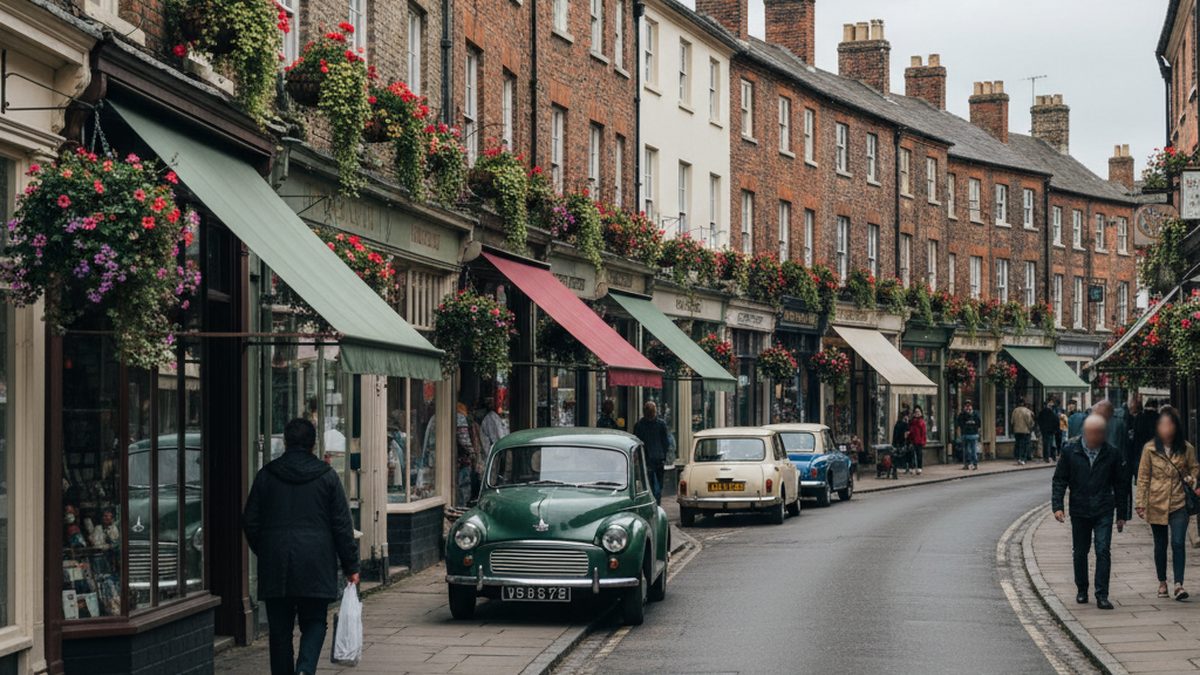
The winner, by a country mile, is High Street. It appears nearly twice as often as the runner-up and is woven into almost every town and village in the land. The high street is the original heart of the British settlement, the place where the market was held, the shops opened and the town did its business. The word "high" here means chief or principal, the same sense as in high court or high table. Every High Street is, by name, the most important street in its town, which is part of why losing them to out-of-town retail has felt like such a national loss.
The Mark of the Railway
In second place, and this is the genuinely surprising one, is Station Road, with more than 7,500 postcodes. Think about what that means. The railways only arrived in the 1830s and 1840s, yet within a few decades the road leading to the new station had become so important to so many towns that it is now the second most common street name in the entire country, ahead of names that had a thousand-year head start. It is a measure of just how completely the railway rewired British life. The irony is that many of those stations later closed in the Beeching cuts of the 1960s, leaving thousands of Station Roads that no longer lead to a station at all.
A Nation of Church Streets
Look closely and a quiet winner emerges. Church Street, Church Road and Church Lane sit at numbers five, six and seven. Add them together and more than 11,000 postcodes are on a road named after the local church, which very nearly matches High Street itself. For most of British history the church was the other fixed point of every community, alongside the marketplace, and the road that led to it earned a name accordingly. Between the High Street and the Church Street, you have the two institutions that organised village life for a thousand years.
Why the Same Names Repeat
The pattern behind the whole list is that the commonest names are not invented, they are descriptive. High Street, Station Road, Church Lane, Mill Lane, London Road, New Road: each one simply tells you what the street led to or what stood on it. Long before street naming became a marketing exercise of Acacia Avenues and Maple Closes, people named a road after the most obvious thing about it. Do that consistently across thousands of independent towns and you end up with the same few names repeated endlessly, a shared vocabulary of place written into the map.
You can look up any street and the postcodes along it using our postcode directory, which holds the full address detail for every road in the country.