


A postcode does not just tell you where people live. It tells you, on average, how old they are. We took the official population data for every postcode district in England, worked out what share of each one is over 60 and what share are children, and ranked them. What comes back is one of the sharpest divides in the country, and you can guess most of it from a map of the coastline.
How We Measured It
The figures here come from the population data attached to the English Indices of Deprivation, which breaks every area down by age band. We aggregated it to postcode districts and kept those with at least 8,000 residents, so the rankings reflect real, populated places. The data covers England only. One quick note on language: a place being "old" or "young" is about the mix of ages living there today, nothing more.
The Retired Coast
The oldest postcode districts in England are, almost without exception, by the sea.
| Outcode | Town | Aged 60+ |
|---|---|---|
| PE36 | Hunstanton, Norfolk | 50.8% |
| LN12 | Mablethorpe, Lincolnshire | 49.9% |
| PO40 | Freshwater, Isle of Wight | 49.5% |
| EX12 | Seaton, Devon | 49.0% |
| CO14 | Walton-on-the-Naze, Essex | 48.1% |
| NR25 | Holt, Norfolk | 47.9% |
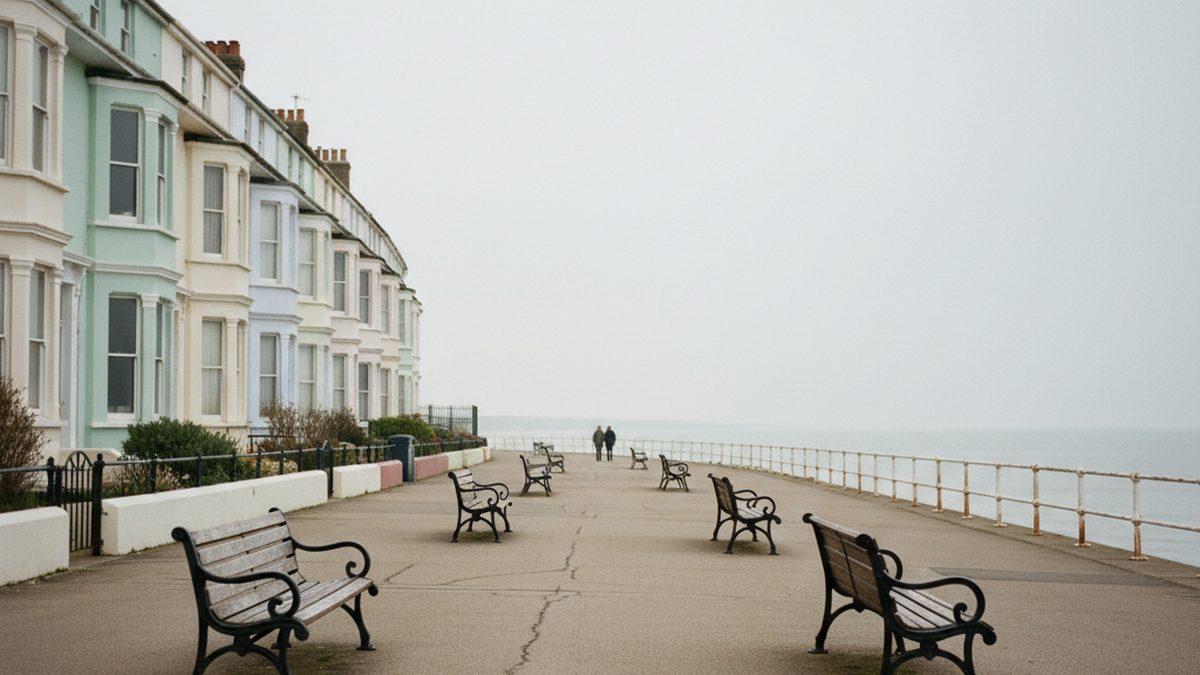
In Hunstanton on the north Norfolk coast, more than half of all residents are aged 60 or over. The same story repeats around the whole coastline: Mablethorpe, the Isle of Wight, the Devon and Essex seaside towns. These are the places people retire to, drawn by the sea air, the slower pace and decades of being the spot the family went on holiday. Over time the working-age population thins out, the schools shrink, and the median age climbs until half the town is drawing a pension.
The Young Cities
Flip the data over and the youngest districts are somewhere completely different: the inner cities, and Birmingham above all.
| Outcode | Area | Aged 0 to 15 |
|---|---|---|
| B8 | Birmingham (Saltley) | 28.8% |
| B9 | Birmingham (Bordesley Green) | 27.9% |
| B10 | Birmingham (Small Heath) | 27.7% |
| M18 | Manchester (Gorton) | 27.2% |
| OL8 | Oldham | 26.9% |
In several Birmingham districts, well over a quarter of the population are children under 16. These are dense, urban, often younger communities with larger average household sizes, and the contrast with the coast could hardly be sharper. In Hunstanton roughly one resident in fifty-something is a young child; in Saltley it is closer to one in three. They are the same age data, the same country, pulled to opposite extremes.
The National Picture
For the country as a whole, the balance sits between those two poles.
England by age
- Aged 0 to 15 around 18 percent of the population
- Aged 60 and over around 24 percent
So nationally there are more over-60s than children, by a fair margin. What the rankings show is how unevenly those two groups are spread. The old and the young are not mixed together evenly across the country; they are sorted, almost sieved, into different kinds of place.
Why It Matters
This sorting has real consequences. A town where half the residents are retired needs very different services from one full of young families: more healthcare and social care, fewer schools, different transport, different shops. The seaside towns at the top of our list face exactly this challenge, often combined with the economic difficulties that come when the working-age population moves away. The young inner-city districts face the opposite pressure, with stretched schools and growing demand for family housing.
You can explore the area behind any postcode, including the places around it, through our postcode directory. The age figures here come from the population data published alongside the English Indices of Deprivation.