



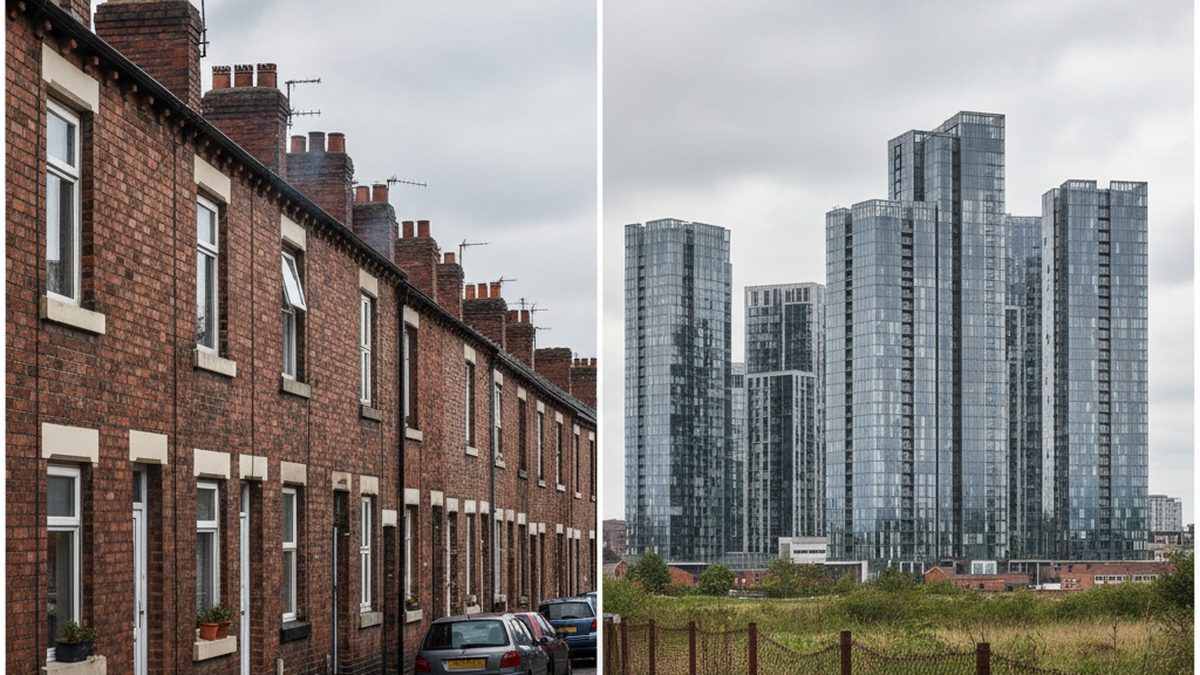
For decades the property story was simple: London and the South East raced ahead while the rest of the country trailed behind. We put that idea to the test using the Land Registry record, comparing the average price of a home in 2018 with the average in 2025 for every postcode area in England and Wales. What we found was almost the opposite of the old script.
How We Measured It
We took every residential sale, houses and flats up to two million pounds, and worked out the average price for 2018 and again for 2025, keeping only postcode areas with at least 300 sales in each year. Nationally, the average home rose from about £282,000 in 2018 to £342,000 in 2025, a rise of roughly 21 percent. One honest caveat: this is the average sale price, so it can be nudged by the mix of homes sold in an area as well as by underlying values. The national direction, though, is clear, and the extremes are striking.
The North Surges
The biggest gains did not come from the expensive South. They came from some of the cheapest places in the country.
| Outcode | Area | 2018 | 2025 | Change |
|---|---|---|---|---|
| S65 | Rotherham | £115,819 | £199,168 | +72% |
| L1 | Liverpool centre | £100,494 | £172,000 | +71% |
| L4 | Liverpool (Walton) | £70,680 | £120,426 | +70% |
| OL8 | Oldham | £109,434 | £185,148 | +69% |
| BL3 | Bolton | £121,726 | £196,496 | +61% |
| M23 | Manchester (Wythenshawe) | £169,747 | £273,824 | +61% |
Rotherham, inner Liverpool, Oldham, Bolton, Wythenshawe: every one of the top risers is a place that started cheap. A home in Liverpool's L4 that cost around £71,000 in 2018 was selling for £120,000 by 2025. These are not glamorous postcodes, but they delivered the kind of percentage gains that prime London could only dream of, driven by affordability, regeneration and buyers priced out of the South looking north.
Prime London Slips
Now the other end of the table, which is even more surprising. The biggest fallers are almost all in prime and central London.
| Outcode | Area | 2018 | 2025 | Change |
|---|---|---|---|---|
| E1 | Whitechapel / Stepney | £624,893 | £508,995 | -19% |
| SE1 | Southwark / Bermondsey | £763,294 | £648,508 | -15% |
| W12 | Shepherd's Bush | £838,055 | £713,534 | -15% |
| W2 | Paddington / Bayswater | £792,545 | £746,923 | -6% |
| W6 | Hammersmith | £818,197 | £779,865 | -5% |
These are flat-heavy central districts that boomed in the early 2010s and then ran out of road. After the 2016 stamp duty changes on expensive and additional homes, the slowdown in overseas buying and a glut of new luxury flats, prime central London cooled and in places went into reverse. A flat in Whitechapel that fetched around £625,000 in 2018 was going for closer to £509,000 by 2025. In cash terms these are still expensive homes, but they are worth less than they were seven years ago.
The Gap Narrows
Put the two ends together and you can watch the country's property gap close. In 2018, a typical home in central London cost six or seven times one in Liverpool's L4. By 2025 that multiple had shrunk, as the bottom rose and the top fell. This is exactly the kind of convergence that "levelling up" was supposed to deliver, except the market did much of it on its own, driven by affordability rather than policy. It is worth saying that the North rising 70 percent from a low base and London slipping from a high one does not make them equal; the absolute prices are still worlds apart. But the direction of travel has reversed.
What It Means
For buyers, the lesson is that the biggest percentage gains have come from the least fashionable places, and that an expensive postcode is not a guarantee of growth. For anyone who bought a prime London flat near the top of the market, the last few years have been a hard reminder that property does not only go up. As ever, the averages hide a lot of variation street by street, but the headline is hard to miss: over the last seven years, the cheap got dearer and the dear got cheaper.
You can see the price history for any area with our house prices by postcode tool. Every figure here comes from the public HM Land Registry Price Paid record.