



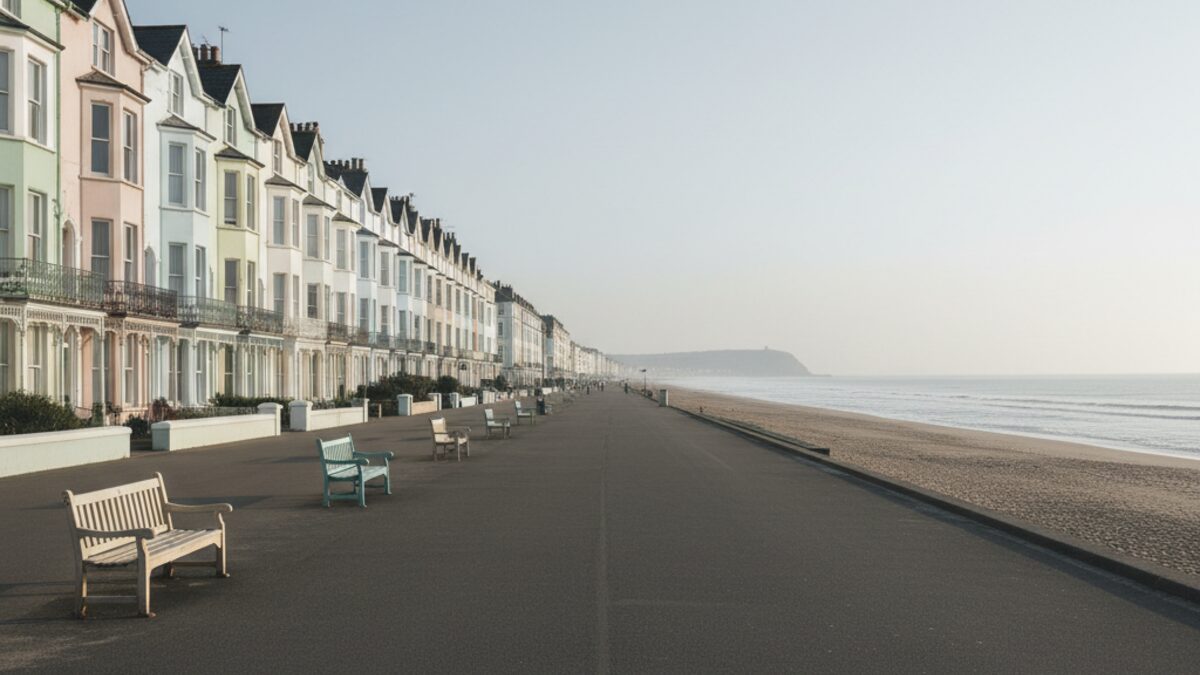
Britain is getting older. That much we know from every pension forecast and census headline. But the greying of the country is not happening evenly. Some corners are barely ageing at all, while others have already turned silver. Where you live now might tell you more about the age of your neighbours than you expect.
The 2021 Census age structure data for England and Wales, broken down by postcode area, reveals a country split not just by north and south, but by coast and city, by old economy and new. The oldest areas are coastal retreats and rural market towns. The youngest are outer London suburbs and northern industrial towns. The map of Britain is no longer just about wealth or political allegiance. It is about who is raising children and who is retiring.
The Shape Of The Country
The national picture is one of slow, steady ageing. But the extremes are dramatic. The oldest postcode area in England and Wales is DT, covering Weymouth and the Dorset coast, where nearly three in ten residents (29.2 per cent) are aged 65 or over. That is almost double the national average. At the other end, the youngest area by share of under 16s is IG (Ilford) and RM (Romford), both in outer east London, where 22.5 per cent of the population are children. These are not minor gaps. They represent entirely different demographic realities.
The Oldest Corners
The oldest areas form a clear belt: the south west and the south coast. DT (Weymouth) leads, followed by TQ (Newton Abbot, covering Torbay and the Teignbridge area) at 27.3 per cent, TA (Taunton, stretching across Somerset) at 25.7 per cent, and HR (Hereford) at 25.6 per cent. These are places where the retirement dream meets the practical reality of a long life. Seaside towns, cathedral cities, and the rolling hills of the Welsh borders all share a common trait: young people leave and older people stay, or arrive.
| Postcode area | Aged 65+ | Aged under 16 |
|---|---|---|
| DT (Weymouth) | 29.2% | 15.1% |
| TQ (Newton Abbot) | 27.3% | 15.7% |
| TA (Taunton) | 25.7% | 16.6% |
| HR (Hereford) | 25.6% | 16.1% |
| EX (Exeter) | 25.1% | 15.9% |
| SY (Shrewsbury) | 25.1% | 15.7% |
| FY (Blackpool) | 24.7% | 16.3% |
| BH (Bournemouth) | 24.6% | 15.9% |
What is striking is the sheer concentration. In DT, nearly a third of everyone you pass in the street is over state pension age. That has consequences for local services, transport, and the feel of a place. Shops close earlier. GPs are busier. The local football club is less likely to be packed with teenagers and more likely to host a coffee morning.
The Youngest Corners
The youngest areas tell a different story. IG (Ilford) and RM (Romford) both have 22.5 per cent of residents under 16. BD (Bradford) is close behind at 22.3 per cent, and OL (Oldham) at 22.2 per cent. These are places with high birth rates, large families, and often significant ethnic minority communities where younger age profiles are common. They are also, in the case of Bradford and Oldham, areas with lower average house prices and more affordable housing for families.
| Postcode area | Aged under 16 | Aged 65+ |
|---|---|---|
| IG (Ilford) | 22.5% | 11.8% |
| RM (Romford) | 22.5% | 13.8% |
| BD (Bradford) | 22.3% | 15.8% |
| OL (Oldham) | 22.2% | 16.2% |
| LU (Luton) | 21.8% | 14.3% |
| SL (Slough) | 21.5% | 15.8% |
| UB (Southall) | 21.2% | 11.9% |
| B (Birmingham) | 21.1% | 15.8% |
The contrast is not just about age. It is about the shape of daily life. In these areas, schools are full, playgrounds are busy, and the high street still sells children's shoes. The population pyramid is wide at the bottom. That brings different pressures: childcare costs, school places, and the need for youth services. It also brings energy and a future tax base, if the economy can provide jobs.
Why Age Clusters
Age clusters are not random. They follow economics and history. The south west and coastal belt has long attracted retirees, drawn by climate, scenery, and a slower pace. Young people leave for cities with better jobs and education. The result is a self reinforcing cycle: fewer young adults means fewer births, which makes the area older still.
In outer London and northern mill towns, the pattern is reversed. These areas have attracted younger migrants and families, often from communities with higher fertility rates. Housing is cheaper than in central London or the commuter belt. Jobs in logistics, retail, and public services are available. The result is a population that is younger, growing, and more diverse. The two Britains are not just divided by wealth. They are divided by age.
What It Means
An older population is not a problem in itself. It reflects longer lives and successful retirement. But it does mean that some areas face a future of declining school rolls, a shrinking workforce, and higher demand for health and social care. The oldest areas will need to adapt, perhaps by attracting younger families or by redesigning services for an older demographic.
The youngest areas face the opposite challenge. They will need to invest in schools, housing, and jobs for a growing population. If they succeed, they will be the engine rooms of the future. If they fail, the young families who sustain them may move on, and the greying map will spread further inland. The Census 2021 data gives us a snapshot. The next decade will tell us whether these clusters harden or dissolve.