



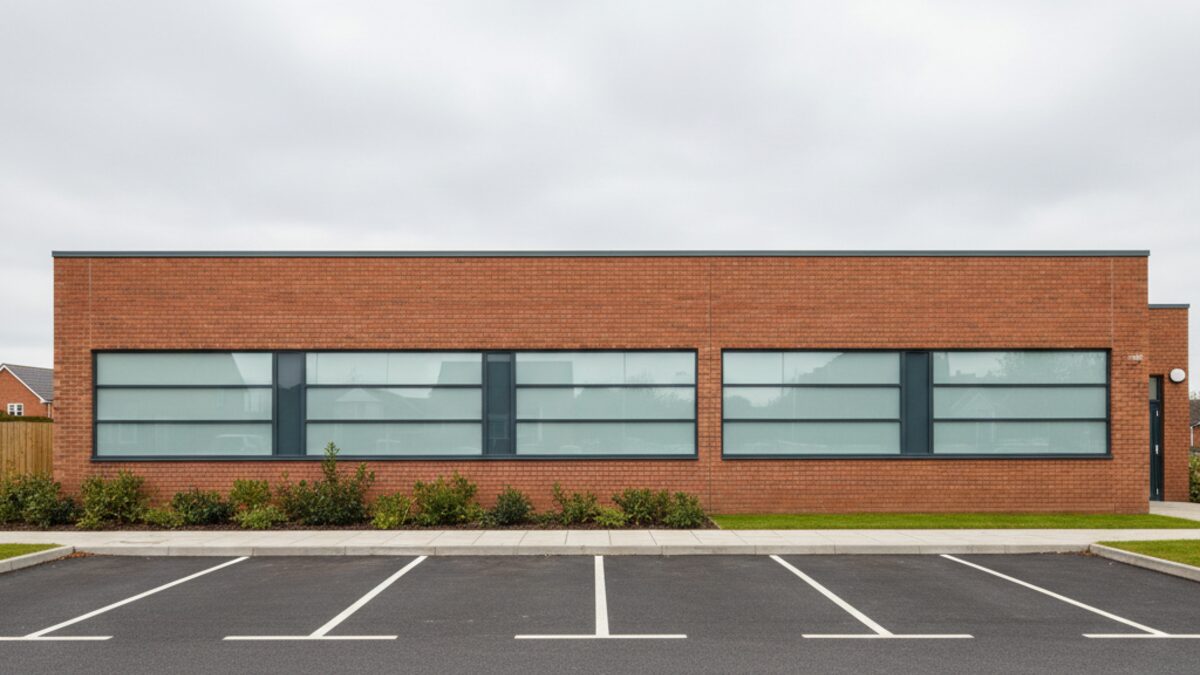
If you live in Wigan, you are never far from a GP surgery. If you live in Watford, you might find yourself travelling a little further. That is the picture painted by a new analysis of NHS data, which maps the distribution of general practice premises across England. The map is uneven, sometimes starkly so, and it raises questions about who gets easy access to primary care and who does not.
We counted 12,322 active GP surgeries across English postcode areas and divided that figure by the resident population, based on the latest census. The national average is 21.7 surgeries per 100,000 people. But the local figures range from more than twice that average to barely half of it.
Counting The Surgeries
The data comes from the NHS Organisation Data Service, which covers England only. It records every open GP surgery, from the single-handed practice in a converted house to the large health centre with a dozen doctors. We took each postcode area, added up its surgeries, and divided by its population. The result is a simple ratio: the number of GP premises per 100,000 residents.
This is not a measure of how many doctors are available, or how long you wait for an appointment. It is a measure of physical access points: how many front doors you can walk through to see a GP. That distinction matters, as we shall see.
The Best Served
The highest ratio in England belongs to the WN postcode area, covering Wigan and its surroundings, with 42.6 GP surgeries per 100,000 people. That is almost double the national average. Plymouth follows at 38.1, then Liverpool at 34.3, and Doncaster at 31.0.
| Postcode area | GP surgeries | Per 100,000 people |
|---|---|---|
| WN (Wigan) | 134 | 42.6 |
| PL (Plymouth) | 215 | 38.1 |
| L (Liverpool) | 307 | 34.3 |
| DN (Doncaster) | 237 | 31 |
| GL (Gloucester) | 200 | 30.4 |
| CV (Coventry) | 263 | 29.3 |
| BL (Bolton) | 118 | 29.2 |
| W (London) | 153 | 28.5 |
These are places where the surgery is often a small, local building on a residential street. In Wigan, the legacy of the old mining communities and their tight knit health centres seems to linger. In Liverpool and Plymouth, the urban fabric is dense and the surgeries are numerous. A resident of Wigan town centre can probably walk to a surgery in ten minutes.
The Worst Served
At the other end of the scale, the picture is very different. The worst served postcode area is Watford, WD, with just 12.4 GP surgeries per 100,000 people. That is exactly the same ratio as Bournemouth, BH. Stevenage, SG, is only a hair better at 12.5, and Northampton, NN, comes in at 13.1.
| Postcode area | GP surgeries | Per 100,000 people |
|---|---|---|
| WD (Watford) | 35 | 12.4 |
| BH (Bournemouth) | 72 | 12.4 |
| SG (Stevenage) | 55 | 12.5 |
| NN (Northampton) | 97 | 13.1 |
| DT (Weymouth) | 30 | 13.4 |
| CA (Carlisle) | 45 | 14.1 |
| DA (Dartford) | 67 | 14.2 |
| TQ (Newton Abbot) | 44 | 14.7 |
These are mostly southern towns and cities, often with fast growing populations and a health infrastructure that has not kept pace. Watford and Stevenage are commuter towns where the pressure on the NHS is high and the number of surgeries has not risen with the housing stock. Bournemouth, a coastal retirement destination, has a high proportion of elderly residents who need more GP time, but fewer surgeries to provide it.
A Word Of Caution
This count is of surgeries, not of individual doctors or appointment slots. A large surgery in a city centre may serve ten times as many patients as a tiny rural practice. So a place with a low number of surgeries per head might still have plenty of doctor time if its few surgeries are big. Conversely, a place with many small surgeries might still struggle if each one has only a single GP working part time.
The data is also England only. Scotland, Wales and Northern Ireland have their own health services and are not included. And the postcode area is a blunt geographic unit: Wigan covers a compact area, while a large rural area like Lincolnshire spreads its surgeries thinly. The ratio is a useful indicator of access points, but no more than that.
What It Means
The GP gap is real, but it is not simply about doctor numbers. It is about geography and the shape of primary care. In the best served areas, the surgery is a local amenity: you trip over it. In the worst served, it is a destination: you plan a journey. That matters for older people, for those without cars, and for anyone whose health is fragile.
Policymakers looking at these figures might ask why Watford has so few surgeries for its population, and whether the large health centre model is a sufficient substitute. They might ask whether Wigan has too many small surgeries, or just the right number. The answer is not in the ratio alone. But the ratio is a starting point, and a vivid one. It shows that where you live still shapes how easy it is to see a doctor.