


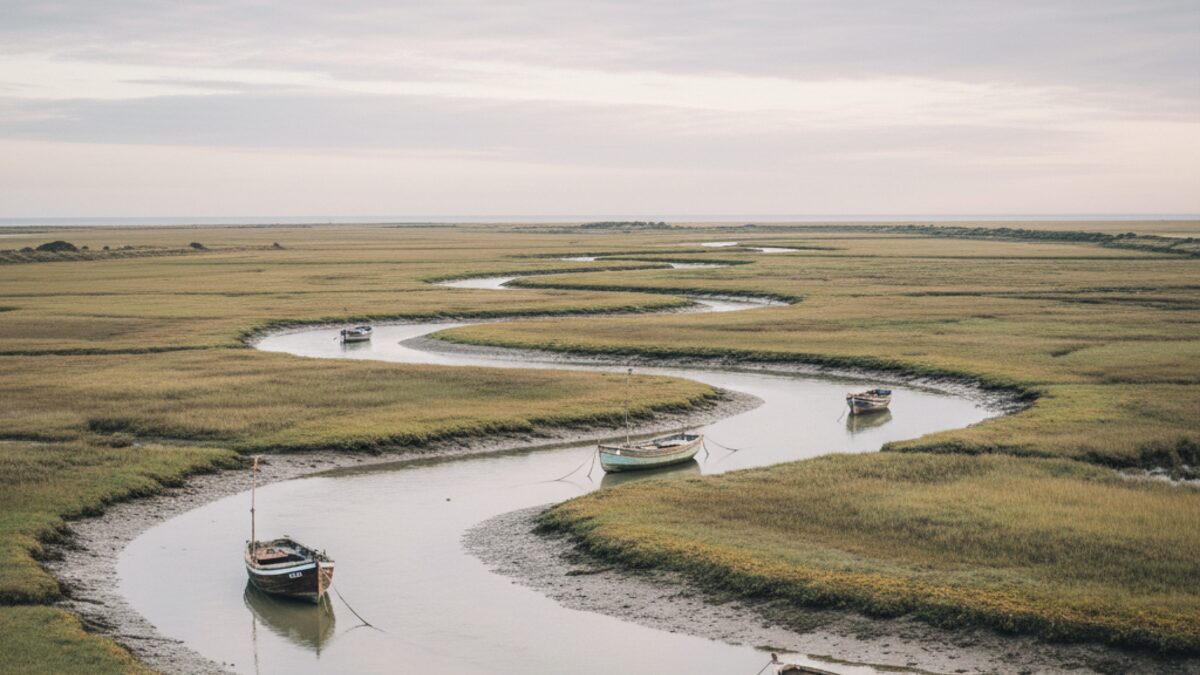
Essex is a county of quiet contradictions. Its name conjures up images of ancient woodlands, winding country lanes and the flat, windswept marshlands that meet the North Sea. But look a little closer at the numbers, and you find a place that is anything but uniform. From the leafy, commuter-belt villages of the west to the fading seaside resorts of the east, the figures tell a story of two very different Esseces.
At a Glance
With a population of around 2,177,480 spread across 77 postcode districts, Essex is a sprawling and populous county. Its largest towns, according to the data, are not the grand market centres you might expect, but a collection of hamlets and villages with names that sound more like a rural joke than a census entry: Church End, Tye Green, Lower Green, Duck End, Howe Street, and Little London. These are the beating hearts of the Essex countryside, though their populations are modest. At the other end of the scale, the county is anchored by the city of Colchester and the major towns of Chelmsford, Basildon, and Southend-on-Sea. The average home in Essex sells for £411,655, which is 18 per cent above the average for England and Wales. That is a significant premium, but it is not the whole story.
Essex at a glance
- Population: about 2,177,480
- Postcode districts: 77
- Average sale price: £411,655 (+18% vs the England and Wales average)
- Schools rated Outstanding: 10.3% (66 of 640)
The Property Divide
The average price tag hides a chasm. The most expensive district in the county is CM4, centred on the town of Ingatestone, where a typical home costs £802,653. That is nearly four times the average for the whole of England and Wales. At the other end sits CO15, the Clacton-on-Sea district, where the average is just £230,498. The gap between the dearest and cheapest parts of Essex is a factor of about 3.5. That is a huge spread for a single county, and it reflects the deep divide between the commuter belt that reaches into London and the coastal economy that has struggled to keep pace.
Ingatestone is a classic Essex commuter village: a medieval high street, a railway station, and a direct line to Liverpool Street in under 40 minutes. That convenience comes at a price. Clacton, by contrast, is a seaside town that boomed in the early 20th century but has since seen its fortunes ebb. The holiday trade has faded, and the local economy is more reliant on low-wage service jobs and benefits. The result is a property market that is the cheapest in the county, and one of the cheapest on the entire English coast. For the price of a modest flat in Ingatestone, you could buy a whole house in Clacton, with change left over for a new kitchen.
| Postcode district | Average price | |
|---|---|---|
| Most expensive district | CM4 (Ingatestone) | £802,653 |
| Least expensive district | CO15 (Clacton-on-Sea) | £230,498 |
Rich and Poor
The property divide is not just about bricks and mortar; it is a mirror of deeper inequality. The average Index of Multiple Deprivation decile for Essex is 6.1 out of 10, where 1 is the most deprived and 10 the least. That puts the county slightly on the comfortable side of the national average. But the range is wide. Across its 77 districts, the score runs from a low of 3 (meaning some of the most deprived parts of England) to a high of 9 (close to the least deprived). The most deprived corners of Essex are not in the cities, but in the coastal towns. Jaywick, a settlement just outside Clacton, has been repeatedly named the most deprived neighbourhood in the country. Meanwhile, the commuter villages of the west, like Ingatestone and the Uttlesford district around Saffron Walden, sit at the other end, with scores that place them among the most affluent in the land.
This is not a county of gentle, rolling gradients. It is a place where the rich and the poor live in separate worlds, often only a few miles apart. The A12, the main road to the coast, is a kind of economic boundary. To the west of it, the countryside is well kept, the schools are good, and the houses are large. To the east, the landscape flattens, the air smells of salt and chips, and the numbers tell a different story.
Schools
Education is one of the few things that does not follow the property line. Of the 640 schools in Essex that have been inspected by Ofsted, 10.3 per cent hold the top grade of Outstanding. That is a respectable figure, a little above the national average, and it is spread across the county. Some of the best schools are in the coastal towns, where the property is cheap, and some of the worst are in the expensive commuter villages. The correlation is weak. In Clacton, for example, there are several primary schools rated Outstanding, even as the town struggles with deprivation. In Ingatestone, the local secondary school is good, but not outstanding. The quality of a child's education in Essex is less a matter of postcode than of luck and leadership.
The Bottom Line
Essex is a county of extremes. It has the country lanes, the coast, and the charmingly named villages. But it also has a property market that is as divided as its politics, and a social landscape that is anything but even. The numbers show a place that is prosperous on average, but deeply unequal in practice. For the price of a flat in the west, you can buy a house in the east, and the gap is not just in the price tag. It is in the quality of life, the opportunities, and the view from the window. Essex by the numbers is a county of two halves, and the line between them is drawn sharply on the map.