


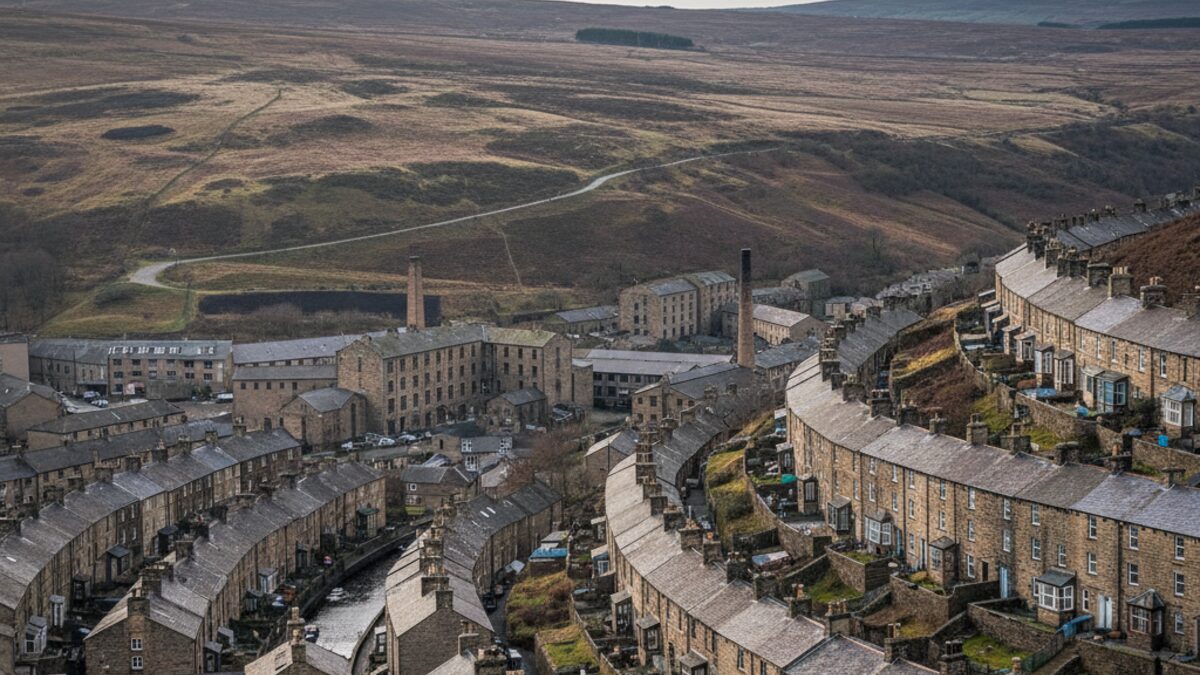
West Yorkshire: a county of contrasts, where the genteel market towns of the east meet the industrial edge of the west. With a population of around 2,378,065 spread across 81 postcode districts, it is a region that refuses to be easily summarised. The largest towns listed in the data include Scholes, Woodhouse, Hill Top, Midgley, Upper Denby, and Bank Top, places that sound more like a collection of speculative fiction settlements than a modern county. Yet these names conceal a landscape of sharp economic divides, property peaks, and educational outcomes that tell a story far more complex than the Ordnance Survey might suggest.
At a Glance
West Yorkshire at a glance
- Population: about 2,378,065
- Postcode districts: 81
- Average sale price: £236,659 (-32% vs the England and Wales average)
- Schools rated Outstanding: 11.7% (93 of 794)
At the broadest level, the average sale price in West Yorkshire is £236,659, which is 32 per cent lower than the England and Wales average. That is a significant discount, but the county is no monolith. Its most expensive district, LS22 (Wetherby), commands an average of £472,914, while the cheapest, BD3 (Bradford), comes in at £112,105. The gap between them is a factor of 4.2. Deprivation, measured by the Index of Multiple Deprivation, gives a mean decile of 4.7 out of 10 (with 1 being most deprived), ranging from 1 to 9 across the districts. And in the realm of education, 11.7 per cent of the 794 Ofsted rated schools hold the top grade of Outstanding. Not bad, but not quite a clean bill of health.
The Property Divide
| Postcode district | Average price | |
|---|---|---|
| Most expensive district | LS22 (Wetherby) | £472,914 |
| Least expensive district | BD3 (Bradford) | £112,105 |
The property market in West Yorkshire is a tale of two extremes. At the top end sits Wetherby, the LS22 postcode district, where the average house price reaches nearly half a million pounds. At the other end, Bradford’s BD3 district offers a far more modest average of just over £112,000. That is a ratio of roughly 4.2 to 1, a chasm that underscores the county’s internal economic geography. For context, the England and Wales average price of £348,000 (implied by the 32 per cent discount figure) means that Wetherby is actually 36 per cent above the national average, while Bradford sits at 68 per cent below it. The top district, LS22, is around 4.2 times more expensive than the cheapest district, BD3. That kind of spread is not unusual for a large metropolitan county, but it does raise eyebrows. Why is Wetherby so pricey? Its leafy reputation, good schools, and commuter links to Leeds and York probably play a part. Bradford, meanwhile, has long struggled with a legacy of industrial decline and a housing stock that is both older and cheaper. The gap is not just about bricks and mortar; it reflects decades of investment, transport links, and social history. For buyers, this is a county where your postcode dictates not just your address but your likely budget, your local school’s Ofsted rating, and your exposure to deprivation.
Rich and Poor
The average Index of Multiple Deprivation (IMD) decile for West Yorkshire is 4.7. That puts it slightly more deprived than the English median (which is 5.0 by design), but the range is wide: from districts scoring a 1 (most deprived) to those reaching 9 (least deprived). In other words, you can find both some of the most disadvantaged neighbourhoods in England and some of the most comfortable, all within the same county. The 4.7 mean suggests that the county’s distribution is skewed towards the more deprived end, but the presence of 9s shows that pockets of relative affluence exist. The gap between the richest and poorest districts in property terms is mirrored in these deprivation scores, though the correlation is not perfect. Wetherby’s LS22, with its high house prices, is likely in a higher decile (closer to 9), while parts of Bradford’s BD3 almost certainly rank nearer to 1. This kind of inequality is emblematic of post-industrial northern counties; West Yorkshire is no exception. The data does not tell us exactly which districts are at the extremes, but the property prices give a strong hint. When the most expensive area is four times the cheapest, you can bet the social indicators follow suit.
Schools
West Yorkshire has 794 Ofsted rated schools. Of those, 11.7 per cent are rated Outstanding, which is a respectable figure. The national average for England is around 16 per cent, so the county sits a little below that. But context matters: many of the most deprived areas tend to have lower Ofsted outcomes, so the 11.7 per cent may reflect the mixed socioeconomic profile. The data does not break down Outstanding rates by district, but it is a fair bet that Wetherby’s schools outperform Bradford’s, given the property and deprivation patterns. The fact that almost nine in ten schools are not Outstanding does not mean they are failing; it simply highlights the competitive nature of the Ofsted grading system. In a county where house prices vary so dramatically, the school ratings are another layer of the postcode lottery. Parents with budgets for Wetherby may find more Outstanding options, while those in Bradford may have to work harder to secure a top-rated place. It is a familiar story, and West Yorkshire tells it clearly.
The Bottom Line
West Yorkshire is a county of sharp edges. Its property market spans from affordable Bradford terraces to semi-rural Wetherby estates, a gap of more than fourfold. Its deprivation score sits just below the national midpoint, with extremes that mirror the house price divide. And its schools, while not outstandingly numerous in the top tier, still offer a decent proportion of high quality. The numbers paint a picture of a region that is neither uniformly struggling nor uniformly prosperous. For the buyer, the parent, the investor, or the casual observer, the message is clear: in West Yorkshire, your postcode is your destiny. And if you can get LS22, you are laughing. If you land in BD3, you might need a bit more grit. Either way, the county has character, history, and a statistical story that is worth reading.