



The Property Ombudsman, Lesley Horton, has published an important reflection on the future of property complaints in the UK. Her assessment points to two major forces reshaping the sector: ambitious housing reform and the relentless advance of artificial intelligence. Together, they are not just altering the rules of the rental and sales markets but are also changing the very nature of disputes that arise.
Horton explains that while technology can streamline many processes, such as tenancy agreements and property maintenance, it also creates new areas of friction. Automated systems, for instance, may misinterpret tenant requests or make decisions without the human oversight that was once standard. At the same time, legislative changes aimed at strengthening tenant rights are shifting long-standing power dynamics. The result is a growing number of novel complaint types that the Ombudsman's office must now navigate.
How small communities experience change

| Town | County | Built-up area |
|---|---|---|
| West Camel | Somerset | 0.2 km² |
| Eastbury | Berkshire | 0.2 km² |
| Newton Rigg | Cumbria | 0.2 km² |
| Saul | Gloucestershire | 0.2 km² |
| Axmouth | Devon | 0.2 km² |
| Ardens Grafton | Warwickshire | 0.2 km² |
| Burstallhill | Suffolk | 0.2 km² |
| Great Clifton | Cumbria | 0.2 km² |
| Heydon | Cambridgeshire | 0.2 km² |
| Oulton | Staffordshire | 0.2 km² |
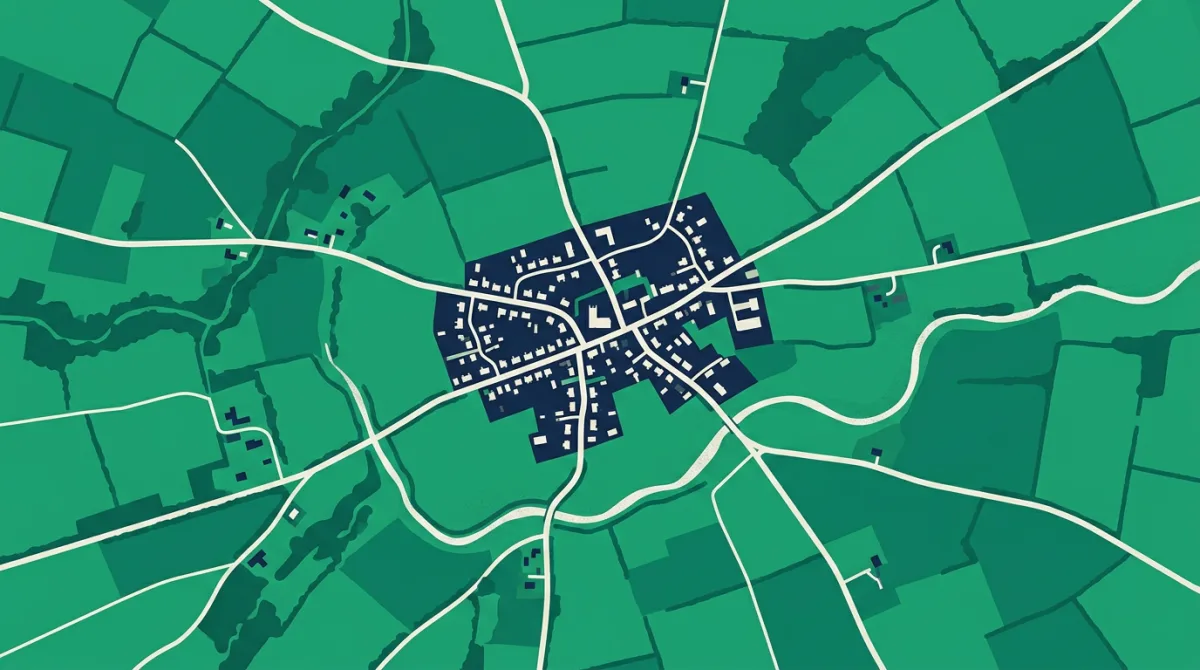
Our ranking of built-up areas, compiled from the most recent census and HM Land Registry data, reveals that West Camel in Somerset is the UK's smallest town by physical extent, covering only 0.2 square kilometres. In such a compact settlement, every property and every neighbour is intimately connected. This closeness traditionally meant that disputes were resolved face-to-face, without the need for formal complaint mechanisms. However, as property transactions and management become increasingly digitised, even these tight-knit communities are encountering unfamiliar challenges.
With just a handful of streets, West Camel has a limited housing stock that makes each tenancy and sale particularly significant. The introduction of online letting platforms and automated referencing systems could undermine the personal touch that residents have long relied upon. A landlord who once dealt directly with a local agent now might rely on an app to handle everything from rent collection to repair scheduling. When that technology fails or miscommunicates, the resulting frustration can quickly escalate into a formal complaint. In a town where everyone knows each other, a single negative experience with an AI system can rapidly become a talking point, potentially souring community relations.
What national trends mean for tight-knit places
The data from West Camel provides a compelling lens through which to view the Ombudsman's concerns. In a town of this sise, the introduction of centralised, algorithm-driven property management platforms could disrupt the personal relationships that have long defined local housing. A tenant whose repair request is handled by a remote AI system, rather than a familiar landlord, may feel a greater sense of distance and, potentially, grievance. Equally, a landlord adapting to new regulatory requirements might find that compliance is more onerous in a small market where margins are thin.
Horton's blog suggests that the intersection of technology and reform could lead to a rise in complaints from areas where they were once rare. For residents of West Camel and similar communities, the impersonal nature of AI-driven decision-making might clash with the close-knit, trust-based traditions of village life. This cultural mismatch could generate disputes that challenge the Ombudsman's traditional categorisations. The Property Ombudsman's office may need to develop new approaches to handle cases that blend technological misunderstandings with local sensitivities.
The national push for greater transparency and fairness in the private rented sector applies uniformly, regardless of a town's sise. In West Camel, where the total built-up area is just 0.2 km², any change to a single property can have a ripple effect across the community. If a landlord decides to sell because of regulatory pressure, the impact is felt far more sharply than in a large city. This magnified effect means that housing reforms, however well-intentioned, must be implemented with an awareness of local conditions.
Our figures underscore that even the country's most intimate built environments are not immune to national policy shifts. As the complaints landscape evolves, Postcodes UK will continue to monitor how these changes play out across different geographic scales, from bustling cities to the smallest rural idylls.
The data behind this
The built-up area ranking draws from HM Land Registry records for property boundaries, population-weighted centroid calculations from the ONS census, and the Postcodes UK database of geographic coordinates. Together, these sources provide precise measurements of town and village extents, allowing us to identify the UK's smallest urban footprints.
In response to reporting by The Negotiator. Analysis and figures by Postcodes UK.