


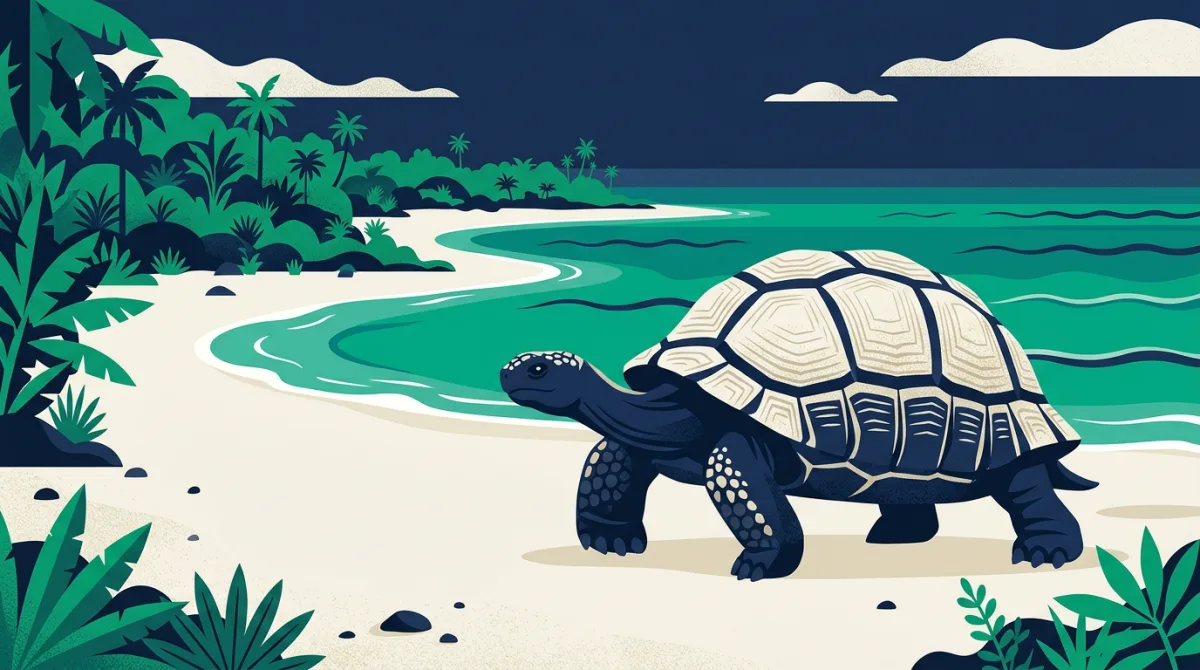
Scientists have counted roughly 180,000 Aldabra giant tortoises living freely on Aldabra Atoll in the Seychelles. The survey, conducted by the Seychelles Islands Foundation, combined aerial imagery with ground observations to reach that figure. It means the atoll now holds more giant tortoises than the entire human population of the Seychelles, which stands at around 100,000.
The Aldabra giant tortoise is one of the largest tortoise species on Earth. Once hunted heavily for meat and oil, its numbers dwindled, but a long-term recovery programme on the remote coral atoll has allowed the population to swell. The survey confirms that Aldabra remains the global stronghold for these animals, with a density that is hard to visualise without a familiar reference point.
Putting the tortoise count into a British postcode context
| Town | County | Built-up area |
|---|---|---|
| Birmingham | West Midlands | 219.1 km² |
| Glasgow | Glasgow City | 138.1 km² |
| Leeds | West Yorkshire | 118.9 km² |
| Sheffield | South Yorkshire | 113.7 km² |
| Liverpool | Merseyside | 109.4 km² |
| Edinburgh | City of Edinburgh | 101.5 km² |
| Bromley | Greater London | 80.3 km² |
| Coventry | West Midlands | 77.7 km² |
| Hillingdon | Greater London | 76.4 km² |
| Manchester | Greater Manchester | 74.8 km² |
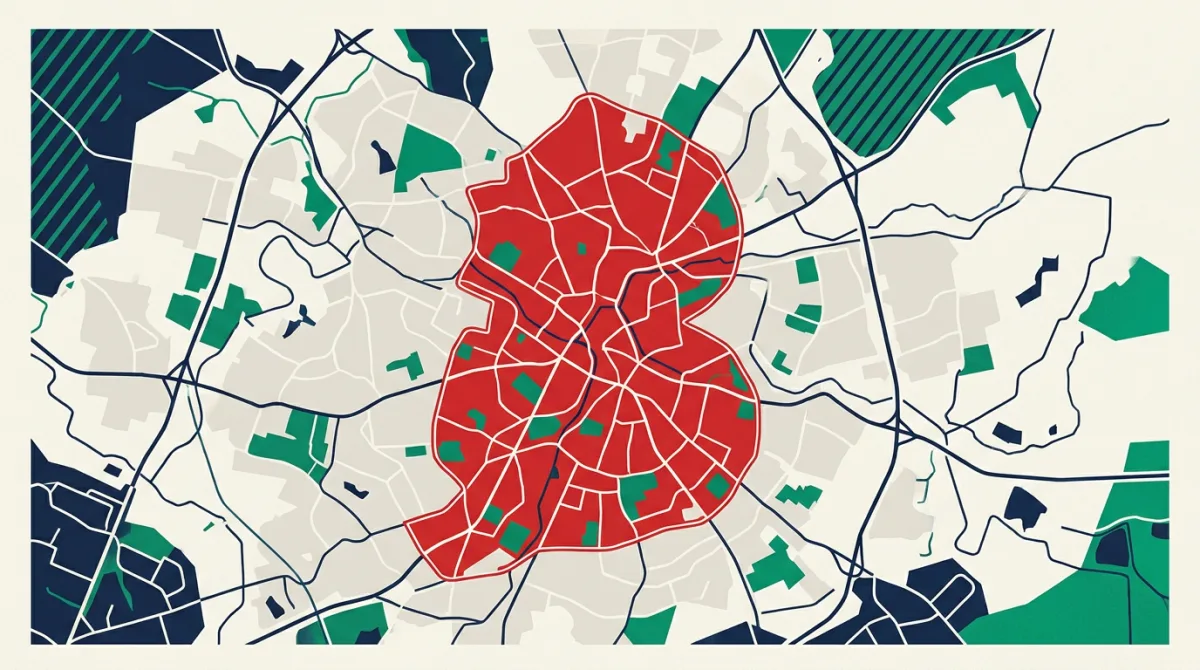
To grasp what 180,000 large reptiles looks like on the ground, we turned to Postcodes UK data on built-up areas. The largest town in our ranking by physical footprint is Birmingham (West Midlands), covering 219.1 square kilometres. If you could gather every Aldabra giant tortoise and spread them evenly across Birmingham's built-up extent, the resulting density would be roughly 821 tortoises per square kilometre.
That is a striking concentration. For comparison, the human population density of Birmingham's built-up area is far higher, but these are animals that can weigh up to 250 kilograms and live for over a century. Imagining more than 800 of them in every square kilometre of Britain's second city gives a sense of just how densely packed the tortoise colony has become on its isolated atoll home.
Why the Birmingham comparison matters
Aldabra Atoll itself is a raised coral reef with a land area of about 155 square kilometres, smaller than Birmingham's built-up footprint. The tortoises are not spread evenly, of course, but the comparison helps to illustrate the sheer scale of the recovery. Postcode districts like B, which covers the heart of Birmingham, typically contain a mix of housing, industry and green space. The idea of replacing every resident and building with a giant tortoise is absurd, but it anchors the conservation success in a recognisable British geography.
The data also highlights how built-up area measurements can offer a useful lens for environmental stories. While we often think of postcodes in terms of delivery routes and property prices, they also define spatial units that can be compared to natural reserves and wildlife strongholds across the globe.
The data behind this
The tortoise population figure comes from the survey reported by the Guardian. The built-up area measurement for Birmingham is sourced from Postcodes UK's own analysis of official geographic data. No other postcode districts were referenced in this piece.
In response to reporting by Guardian Environment. Analysis and figures by Postcodes UK.