



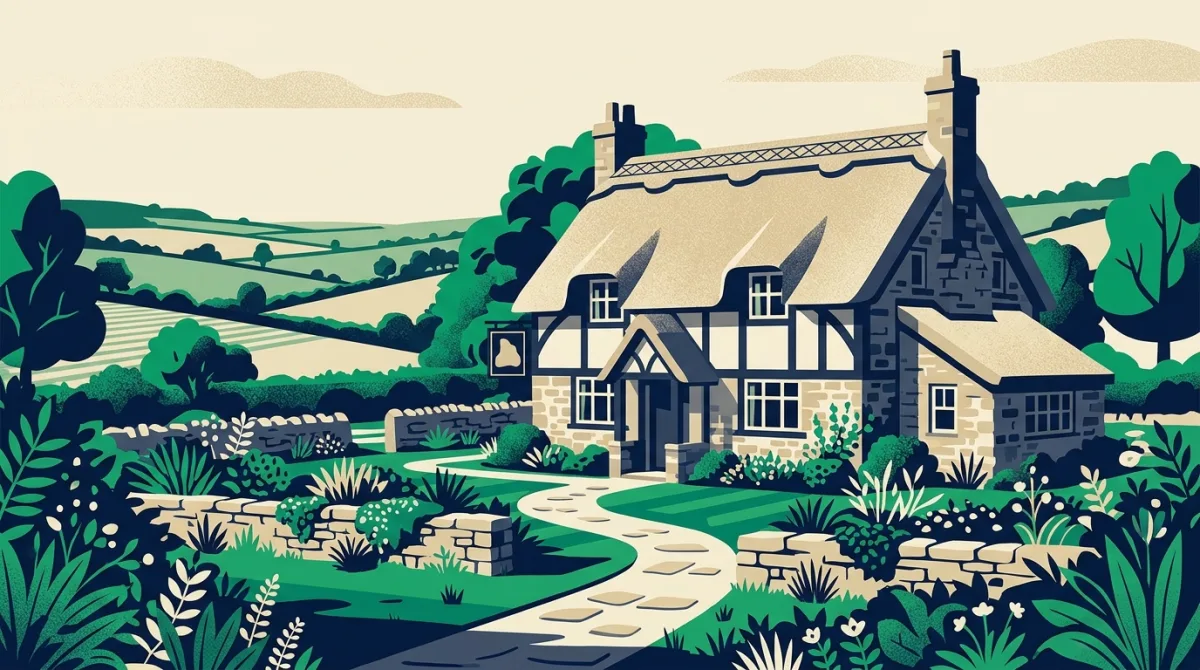
The Guardian’s latest property gallery turns the spotlight on a growing niche in the housing market: former public houses transformed into private residences. The collection ranges from a secluded country inn once used by drovers to a bustling London landmark, each image telling a story of adaptation and renewal. These conversions preserve architectural details while offering buyers a chance to own a piece of local history.
As pubs continue to close across England, driven by shifting social habits and economic pressures, their buildings are finding new life as homes. For house hunters, the appeal lies in spacious rooms, high ceilings, and often a central location that was once the heart of a community. But who is most likely to be drawn to these unique properties? Postcodes UK has examined the age profile of postcode districts to see where demand for such conversions might be strongest.
Where older residents live

| District | Post town | Region | Aged 65+ |
|---|---|---|---|
| PO35 | Bembridge | South East | 46.0% |
| PE36 | Hunstanton | East of England | 44.1% |
| BH13 | Poole | South West | 43.7% |
| PO39 | Totland Bay | South East | 42.7% |
| LN12 | Mablethorpe | East Midlands | 42.6% |
| EX12 | Seaton | South West | 42.2% |
| IP18 | Southwold | East of England | 41.7% |
| PO34 | Seaview | South East | 41.6% |
| LL74 | Tyn-y-Gongl | Wales | 41.2% |
| NR25 | Holt | East of England | 41.2% |
The data reveals a striking concentration of older residents in certain coastal and rural areas. The postcode district PO35, which covers Bembridge on the Isle of Wight, tops the list with 46.0% of its population aged 65 and over. This figure is far above the national average and points to a community where retirement-age households are the dominant demographic. This demographic reality shapes local housing needs, from accessible design to proximity to healthcare and shops.
Why pub conversions suit an ageing population
Former pubs often feature ground-floor layouts that can be adapted for single-level living, a key consideration for older buyers looking to avoid stairs. The generous proportions of former bar areas and function rooms lend themselves to open-plan designs that are both accessible and sociable. In a district like PO35, where nearly half the residents are over 65, properties that offer ease of movement and a connection to the village centre are particularly valuable.
Many of these conversions retain original features such as fireplaces, stained glass, and timber beams, which appeal to buyers seeking character. For retirees relocating to the coast or countryside, a converted pub can provide a sense of permanence and belonging that a modern flat might lack. The Guardian’s gallery shows how developers have turned taprooms into kitchens and beer gardens into private courtyards, creating homes that are both practical and full of charm.
While the data table includes other postcode districts with high proportions of older residents, PO35’s figure of 46.0% stands out. This suggests that in areas with a similar age profile, former pubs converted into homes could see strong interest from downsisers and those wanting to age in place. The combination of a familiar landmark and a thoughtfully designed interior may be exactly what the over-65 market is looking for.
The data behind this
The age statistics come from the most recent census data, analysed at postcode district level by Postcodes UK. Property conversion trends are informed by HM Land Registry records of residential transactions in former commercial premises. The Postcodes UK database aggregates and cross-references these sources to provide a detailed picture of how demographics and housing stock intersect. For more local insights, visit our PO35 profile page.
In response to reporting by Guardian Property. Analysis and figures by Postcodes UK.