



Leeds City Council has confirmed that Pudsey Market is grappling with a steady fall in both customer numbers and trader participation, prompting a public consultation that closes shortly. The historic West Yorkshire market, once a bustling hub for the town, now faces questions over its long-term viability as shopping habits shift and footfall dwindles.
The situation in Pudsey is far from unique. Across Britain, traditional markets are under strain from out-of-town retail parks, online shopping and changing work patterns. Yet the decline of a market in a town that literally carries the word in its name has struck a particular chord, raising broader concerns about what happens to a community when its central gathering place fades.
Postcodes UK has looked at the physical scale of Pudsey within the wider urban landscape to understand how its built-up area compares with other settlements. While sise alone does not determine a town's health, the data offers a useful lens on the relative footprint of places that support traditional markets.
By built-up area, the largest town in this ranking is Birmingham (West Midlands) at 219.1 square kilometres. That sprawling conurbation dwarfs smaller market towns, yet many of those compact settlements continue to sustain vibrant market traditions. Pudsey's own built-up area places it among a cohort of medium-sised towns where the pressures on high street retail are often felt most acutely.
| Town | County | Built-up area |
|---|---|---|
| Birmingham | West Midlands | 219.1 km² |
| Glasgow | Glasgow City | 138.1 km² |
| Leeds | West Yorkshire | 118.9 km² |
| Sheffield | South Yorkshire | 113.7 km² |
| Liverpool | Merseyside | 109.4 km² |
| Edinburgh | City of Edinburgh | 101.5 km² |
| Bromley | Greater London | 80.3 km² |
| Coventry | West Midlands | 77.7 km² |
| Hillingdon | Greater London | 76.4 km² |
| Manchester | Greater Manchester | 74.8 km² |
What the numbers tell us about Pudsey's position
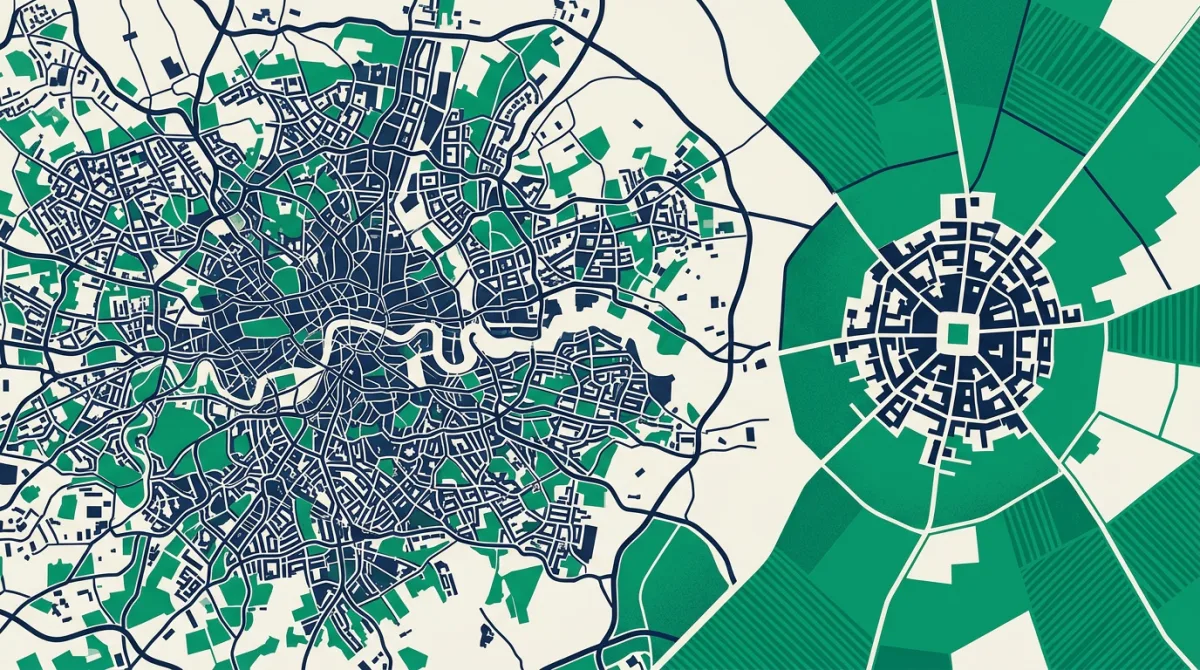
The built-up area figures highlight the enormous variation in urban scale across Britain. Birmingham's 219.1 square kilometres represents a vast metropolitan economy with the population density and footfall to support multiple retail formats, from large shopping centres to specialist markets. At the other end of the spectrum, smaller built-up areas often rely on a single market as a focal point for both commerce and community life.
Pudsey sits within the Leeds built-up area, part of a continuous urban fabric that includes several district centres. This proximity to a major city brings both opportunity and challenge: residents have easy access to Leeds city centre and its retail offer, but that very convenience can draw trade away from local markets. The consultation outcome will need to grapple with this reality, determining whether Pudsey Market can carve out a distinct role that complements rather than competes with larger neighbours.
The data also underscores a wider point about how we measure town vitality. A built-up area of a certain sise does not automatically guarantee a thriving market; conversely, some of Britain's most successful markets operate in relatively compact settlements. The key factors are often less about physical extent and more about investment, programming and the ability to adapt to modern shopping preferences.
The data behind this
The built-up area statistics cited in this analysis are drawn from the Office for National Statistics census geography, accessed via the Postcodes UK database. Market consultation details were originally reported by BBC England, with information attributed to Leeds City Council. All property and geographic data is maintained and updated regularly by Postcodes UK using official sources including HM Land Registry and ONS releases.
In response to reporting by BBC England. Analysis and figures by Postcodes UK.