



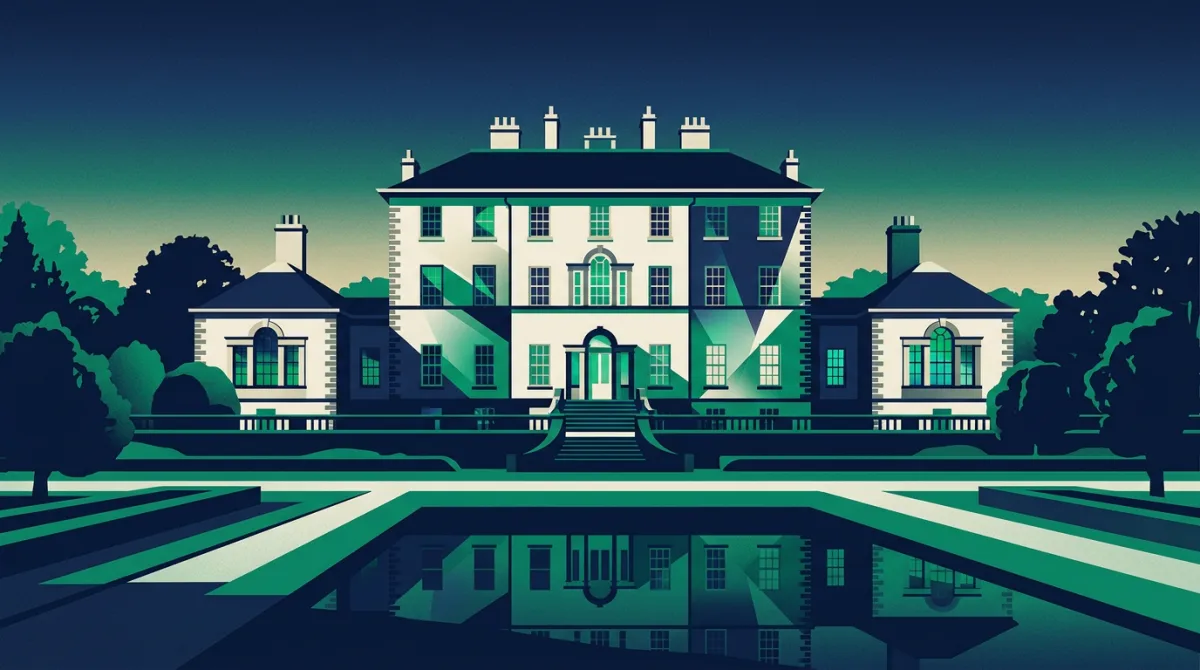
Pollok House, the elegant Georgian mansion that once served as the seat of the Maxwell family, has stood as a cultural landmark in Glasgow’s south side for over two centuries. Managed by the National Trust for Scotland, it welcomed visitors to explore its art collection and period rooms until its closure in 2023, a decision driven by mounting operational costs. Now the house is set to stir back to life, not as a conventional museum but as an unexpected stage for the avant-garde Sonica festival.
Produced by Glasgow-based arts organisation Cryptic, Sonica is a biennial celebration of visual and sonic art that challenges perception. For its run at Pollok House, artists will install light works, immersive soundscapes, and interactive pieces across the building’s historic interiors and grounds. The festival promises to let the public wander through spaces that have been silent for two years, experiencing the house through a radically different lens.
A Georgian landmark reborn for Sonica
| An example postcode district in Glasgow | |
|---|---|
| Postcode district | G1 |
| County | Glasgow City |
| Region | Scotland |
| Population (G1) | 5,426 |
| Households | 4,131 |
| Elevation | about 20m above sea level (up to 51m) |
| Built-up area | 138 km² |
The temporary repurposing of Pollok House signals a creative approach to heritage buildings searching for sustainable futures. While the National Trust for Scotland explores long-term options, Sonica’s intervention shows how classic architecture can host cutting-edge art, attracting new audiences who might never visit a traditional historic house.
How central Glasgow’s G1 postcode district shapes the festival’s context
The postcode district G1, which encompasses Glasgow’s bustling city centre, tells a story of dense urban living. According to Postcodes UK data, the district is home to 5,426 people and the ground here lies at approximately 20 metres above sea level. This low elevation is typical of the River Clyde corridor, where much of Glasgow’s mercantile history unfolded. The compact, low-rise streetscape of G1 is a world away from the rolling lawns and woodland of Pollok Country Park that surround the mansion, yet the festival draws attendees from across the city, mixing the urban energy of central postcodes with the tranquillity of a historic estate.
The full data table below offers a more granular view of G1, including breakdowns by housing type and other key demographic and geographic indicators. This snapshot reveals the multifaceted nature of a central Glasgow postcode, and how such metrics contrast with the open parkland that provides the festival’s setting. For context, the modest population of 5,426 reflects the predominantly commercial and student-oriented character of the area, while the sea-level elevation is a reminder of Glasgow’s industrial past, much of it built along the river.
For a resident of G1, reaching Pollok House involves a short southerly journey, passing from Victorian tenements and modern flats of the centre to the leafy suburbs. This easy accessibility makes the festival a natural outing for city dwellers, and the event may encourage them to see their own postcode in a new light, appreciating the contrast between the vibrant, dense core of G1 and the serene surroundings of a country park. The interplay between tight urban grids and open green spaces is central to Glasgow’s cultural life, and the Sonica festival at Pollok House highlights how heritage venues can bridge these two worlds.
The data behind this
This article draws on reporting by BBC Scotland regarding the Sonica festival at Pollok House. Postcode district information comes from Postcodes UK, which provided the G1 district summary and the full data table above. No house sale price data was consulted, so HM Land Registry is not a source.
In response to reporting by BBC Scotland. Analysis and figures by Postcodes UK.