


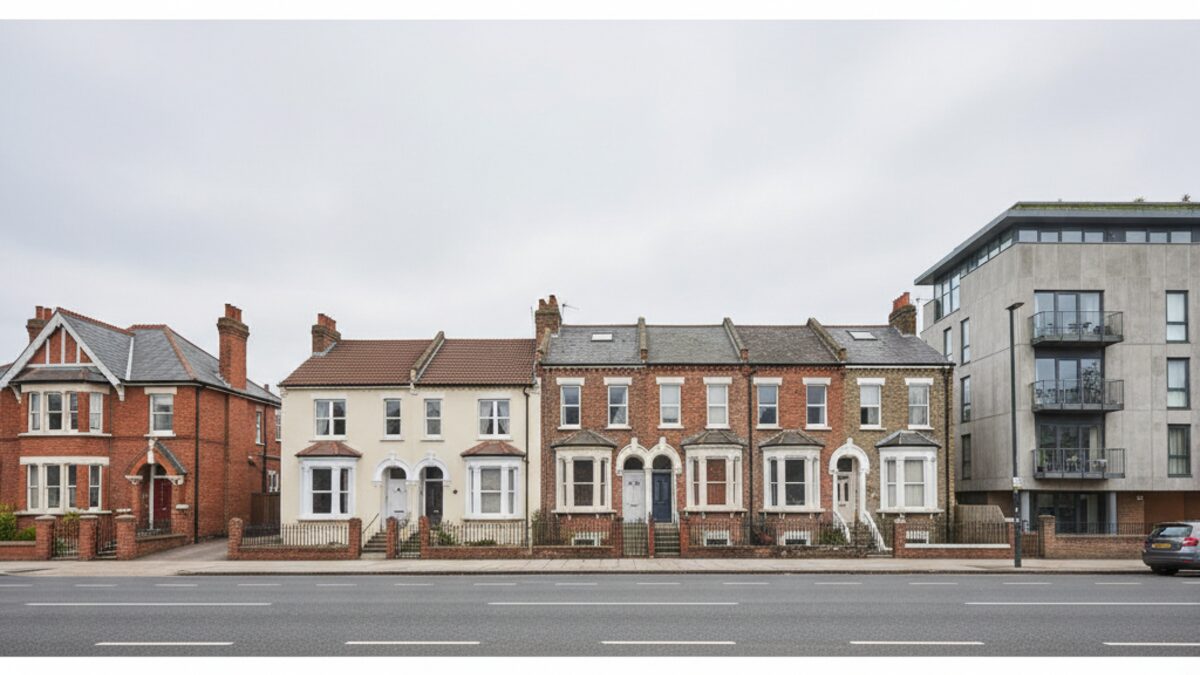
If you have ever browsed property listings, you will have a mental picture of the price ladder: grand detached houses at the top, then perhaps semi detached homes, then terraced houses, and finally flats as the cheapest option. That instinct is not entirely wrong, but the national averages from the Land Registry tell a more surprising story. The actual order of average prices for the four main property types in England and Wales may rearrange your assumptions about what each kind of home really costs.
The Four Rungs
The official figures for average sale prices across England and Wales, drawn from the HM Land Registry Price Paid data, give us this definitive ladder, from most to least expensive:
- Detached: £471,701
- Flat or maisonette: £312,677
- Semi detached: £292,108
- Terraced: £269,535
So the rungs run from detached at the top, then flat, then semi detached, and finally terraced at the bottom. That ordering may raise an eyebrow, especially if you are used to thinking of flats as the entry level option. Let us see why.
| Property type | Average price | Share of sales |
|---|---|---|
| Detached | £471,701 | 24.5% |
| Semi-detached | £292,108 | 28.3% |
| Terraced | £269,535 | 28.9% |
| Flat / maisonette | £312,677 | 18.4% |
The Flat Surprise
The real eyebrow raiser here is the second rung. Flats, at an average of £312,677, cost more than both semi detached homes (£292,108) and terraced houses (£269,535). This feels counterintuitive because a flat is typically smaller and shares walls, floors and ceilings with neighbours. How can it be pricier than a house with its own garden?
The answer is almost entirely down to geography, specifically London. A large share of England's flats are in expensive central London, where even a modest one bedroom apartment can cost half a million pounds or more. Those London prices drag the national average for flats upwards, far above what you might expect for a flat in a northern town or a Midlands suburb. The flat average is therefore a misleading guide to what a flat costs in most of the country; it is heavily weighted by the capital's property market.
Minding the Gaps
The gaps between the rungs are not uniform. The biggest jump is between terraced and semi detached: about £22,500. That makes sense, because a semi usually offers more space, a garden, and often a driveway. The gap between semi and flat is smaller, roughly £20,500, but remember that flat average is lifted by London. In many areas outside the South East, a semi will comfortably outsell a flat.
The gap between flat and detached is the largest: nearly £159,000. That reflects the sheer size and status difference. A detached house, standing alone on its own plot, is the traditional pinnacle of the British property dream, and the price reflects that scarcity and privacy.
A crucial caveat: these are averages for each type, not for specific homes. A sprawling five bedroom terrace in a posh London postcode can cost far more than a small detached cottage in a northern village. The averages say nothing about size, location, condition or garden size within a type. They are a national snapshot, not a guide to any individual street.
What It Means
So what should a buyer or a curious observer take from this ladder? First, that the old hierarchy of house types still holds detached at the top, but with flats unexpectedly perched above semis and terraces in the national figures. Second, that location is the invisible force bending these averages. The flat surprise is really the London surprise.
For anyone shopping for a home, the national averages are a conversation starter, not a price list. A terrace in a cheap area may be the best value, while a flat in a prime city centre may cost as much as a small house elsewhere. The property price ladder is real, but its rungs are flexible, and the view from the top depends very much on where you stand.