


From the winding lanes of medieval villages to the sprawling housing estates of the late twentieth century, the way we name our streets tells a story about how Britain was built. But what do the numbers say? A fresh count of street names registered with HM Land Registry across England and Wales reveals some familiar winners and one notable upset. If you guessed "Road" would top the list, you'd be right. But the name in second place may raise an eyebrow.
That honour goes to "Close", a term that feels more like a cul-de-sac of a modern estate than the grand thoroughfare of a Victorian city. And yet there it sits, comfortably ahead of "Street", "Avenue" and "Lane". The data, drawn from the Land Registry's Price Paid dataset and counting distinct street names by district, offers a fascinating snapshot of our built environment.
Naming Britain
Street names are not merely addresses; they are tiny monuments to planning fashions, historical patterns and the economic cycles that shape our towns. The commonest endings reveal which type of road has been built the most often. And the league table, when you look at it, is a map of British housing in miniature.
Road, with 128,263 distinct names, dominates by a healthy margin. It is the workhorse of the British street system, used for everything from Roman alignments to suburban radials. But the real story is the runner up.
The League Table
Here are the top eight street endings across England and Wales, according to the Land Registry count.
| Street ending | Number of streets | Share of named streets |
|---|---|---|
| Road | 128,263 | 22.6% |
| Close | 110,671 | 19.5% |
| Street | 45,340 | 8.0% |
| Avenue | 44,358 | 7.8% |
| Lane | 42,401 | 7.5% |
| Drive | 38,938 | 6.9% |
| Way | 30,654 | 5.4% |
| Court | 21,121 | 3.7% |
| Gardens | 18,663 | 3.3% |
| Place | 15,700 | 2.8% |
| Crescent | 15,550 | 2.7% |
| Grove | 14,846 | 2.6% |
| Terrace | 13,445 | 2.4% |
| Walk | 10,895 | 1.9% |
The numbers are stark. Road holds a lead of nearly 18,000 over Close. Street, which might feel like the default name in any historic town centre, trails in third place with 45,340. Avenue (44,358), Lane (42,401), Drive (38,938), Way (30,654) and Court (21,121) complete the top eight.
The Rise of the Close
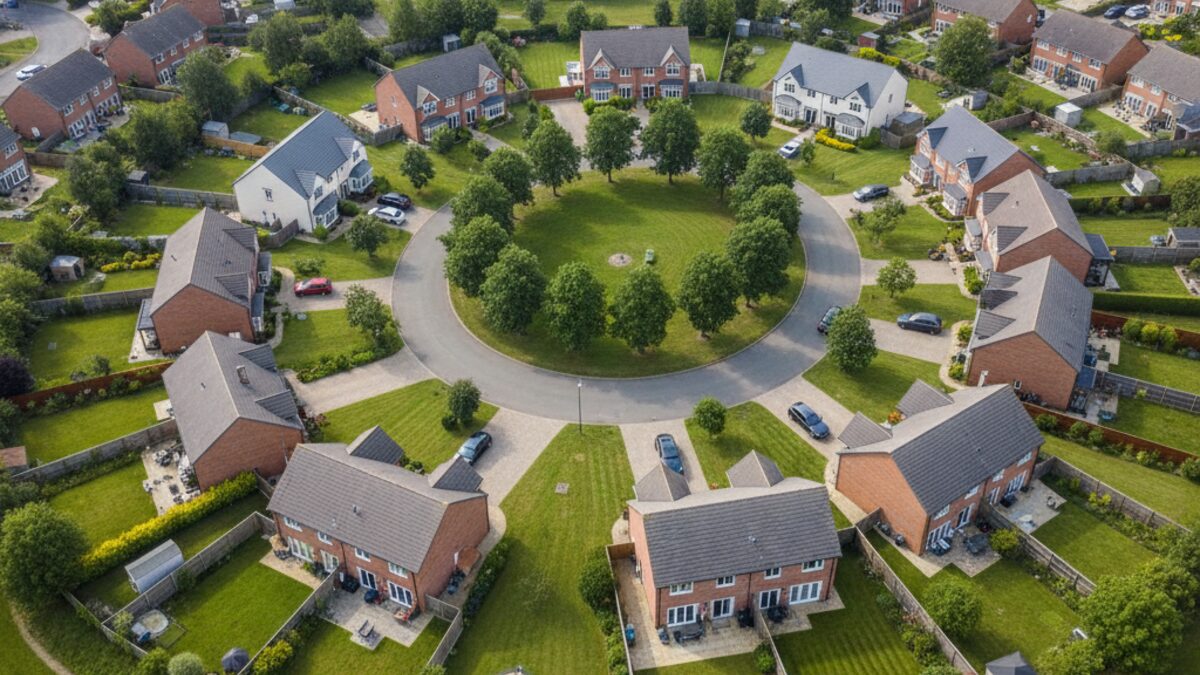
How did Close sneak into second? The answer lies in post-war housing. From the 1950s onwards, the cul-de-sac became the default shape of new estates, especially the sprawling suburban developments that ringed Britain's towns and cities. Planners and developers favoured the Close because it created a quiet, self-contained enclave, safe from through traffic and often ending in a turning circle. Once local authorities and volume housebuilders adopted this pattern, the number of Closes exploded.
That explosion is visible in the Land Registry's tally. Close may lack the ancient pedigree of Street or the romance of Lane, but it is the true signature of late twentieth century Britain. It is the name of the average cul-de-sac, and there are a lot of them.
The Rarer Endings
Beyond the top eight the list quickly becomes a cabinet of curiosities. Terms like 'Wynd', 'Fold', 'Garth' and 'Croft' appear in smaller numbers, often confined to specific regions or historic settlements. 'Terrace' and 'Place' survive from the Georgian and Victorian eras, though they are far less common than their modern counterparts. And then there are the one-offs: names so obscure they barely register in the national count.
These rarer endings are a reminder that street naming is not just a functional exercise. It reflects local accents, old boundaries and the quirks of individual estate agents and councils. 'Close' may dominate the new builds, but the older, weirder endings still hold their ground in pockets of the country.
What It Means
The league table of street endings is not a trivial piece of trivia. It tells us that the British landscape is shaped by two great forces: the historic road network, with its Roads and Streets, and the twentieth century housing boom, which wrote Close, Drive and Way across the suburban map. The surprise of Close in second place is a monument to the cul-de-sac, a design that has been criticised by some planners for encouraging car dependency, but which remains beloved by home buyers seeking peace and quiet.
Ultimately, the numbers remind us that Britain's streets are a living archive. Next time you walk down your own road, lane or close, spare a thought for the thousands of others that share its name, and for the quiet history that put it there.