



A quarter of a million pounds still opens the door to homeownership across large swathes of Britain. The national average sale price for well-sold districts now sits at £366,949, but an impressive number of postcode districts record average prices at or below the £250,000 mark, according to new analysis from Postcodes UK. That £116,949 difference represents the gap between the typical home and what remains a realistic budget for many first-time buyers and families relocating from higher-cost areas.
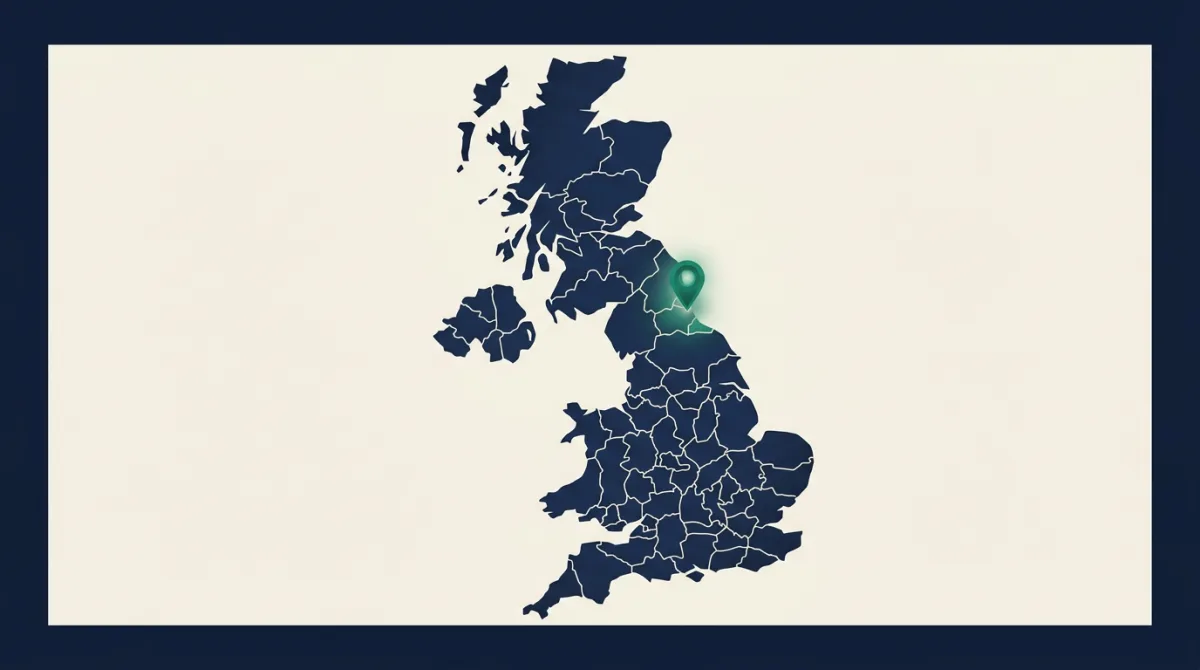
Our data, compiled from HM Land Registry sale prices, breaks down every district where the typical home sells for £250,000 or less. The full ranked table below shows exactly where budget-conscious buyers should start their search. At the very bottom sits SR1, the Sunderland city centre postcode, with a strikingly low average of £69,939.
The £116,949 gap between average and affordable
| District | Post town | Region | Average price |
|---|---|---|---|
| SR1 | Sunderland | North East | £69,939 |
| DL4 | Shildon | North East | £79,214 |
| TS1 | Middlesbrough | North East | £80,533 |
| TS3 | Middlesbrough | North East | £82,642 |
| DN31 | Grimsby | Yorkshire and The Humber | £82,845 |
| HU2 | Hull | Yorkshire and The Humber | £86,318 |
| SR8 | Peterlee | North East | £89,506 |
| CF43 | Ferndale | Wales | £90,459 |
| BD1 | Bradford | Yorkshire and The Humber | £93,903 |
| DL17 | Ferryhill | North East | £98,478 |
The table orders all qualifying postcode districts from highest to lowest average price. You can scroll through to find a location that fits your budget, whether you are set on a particular region or simply searching for the most house for your money. Every entry includes the postcode district, the mean sale price, and the number of transactions behind it, so you can judge the reliability of the figure at a glance.
Most of the districts in the table cluster in the North East, North West, Yorkshire and the Humber, Scotland, and South Wales. A sprinkling of areas in the Midlands also make the cut, but southern England is all but absent above the £250,000 threshold. For anyone planning a move, the list doubles as a property-search filter. By picking a handful of districts within budget and then browsing the detailed postcode pages on our site, you can combine price data with local information on schools, transport, and amenities.
What the ranked districts reveal about the market
The top of the table features districts where average prices sit just under the quarter-million line. These are often places with good transport links to cities such as Manchester, Leeds, or Glasgow, where buyers can still secure a three-bedroom semi or a well-proportioned terrace without exceeding the budget. Moving down the list, you encounter a mix of coastal towns and former industrial centres where prices have been slow to recover from deindustrialisation. Here, £250,000 frequently buys a detached property or a larger period home.
By the time the ranking reaches the bottom quartile, average prices have fallen below £120,000. Postcodes in this band tend to be dominated by flats, smaller terraces, and ex-local authority stock. While the headline numbers are eye-catching, buyers should always check the transaction count; a very low count can mean the average is skewed by a handful of sales. The table only includes districts we classify as well-sold, so the risk of distortion is limited, but it is still worth inspecting the data behind any postcode that interests you.
SR1 Sunderland: the cheapest postcode in the rankings
The title of Britain’s most affordable postcode district belongs to SR1, the compact city-centre zone of Sunderland. At an average sale price of just £69,939, it stands over £180,000 below the national average. The area is dominated by flats, studios, and compact terraces, many of them Victorian conversions. Proximity to the University of Sunderland and the city’s ongoing regeneration projects has not yet pushed prices anywhere near the national trend.
Buyers with the full £250,000 budget could, in theory, purchase multiple properties in SR1, though such arithmetic is mostly a curiosity. What matters is that even at the very bottom of the table, a home remains attainable for someone on a median UK salary, something that feels increasingly remote in the wider market. For investors, the low entry price paired with student rental demand may also hold appeal, though yields are not captured in this price-only analysis.
How we worked it out
This analysis draws on Postcodes UK’s own postcode database, which incorporates HM Land Registry price-paid data, ONS census statistics, and continuous updates to our postcode directory. We calculated the mean residential sale price for each postcode district over a 24-month period, then filtered to include only those districts with a transaction count above a set threshold to ensure statistical reliability. The resulting list was ranked from highest to lowest average price, and we present here every district where the mean fell at or below £250,000. The national average of £366,949 we quote is the mean across all well-sold districts, not the full universe of postcodes. Our lowest-ranked district, SR1 Sunderland, recorded an average of £69,939 over the same period.