




The FA Cup replay between a small village club and Woodford Town is set to attract the largest crowd in the club’s history, all because of a controversial refereeing decision. The original tie ended in confusion after the referee made an incorrect call, prompting an official FA review. Following the review, the governing body ordered the match to be replayed, sparking a surge of interest from locals and neutrals alike.
For a village side that typically plays in front of a modest gathering, the prospect of a record attendance has electrified the community. Volunteers have been working overtime to prepare the ground, with extra seating, refreshment stands and parking arranged to accommodate the influx. The replay is being hailed as a once-in-a-generation event that could change the club’s fortunes.
What household density reveals about community
| District | Post town | Region | Homes per postcode |
|---|---|---|---|
| E12 | London | London | 31.6 |
| E7 | London | London | 30.4 |
| W9 | London | London | 29.9 |
| E5 | London | London | 28.4 |
| PA8 | Erskine | Scotland | 28.2 |
| W14 | London | London | 27.5 |
| E13 | London | London | 27.4 |
| N5 | London | London | 27.1 |
| CR7 | Thornton Heath | London | 26.6 |
| SE24 | London | London | 26.6 |
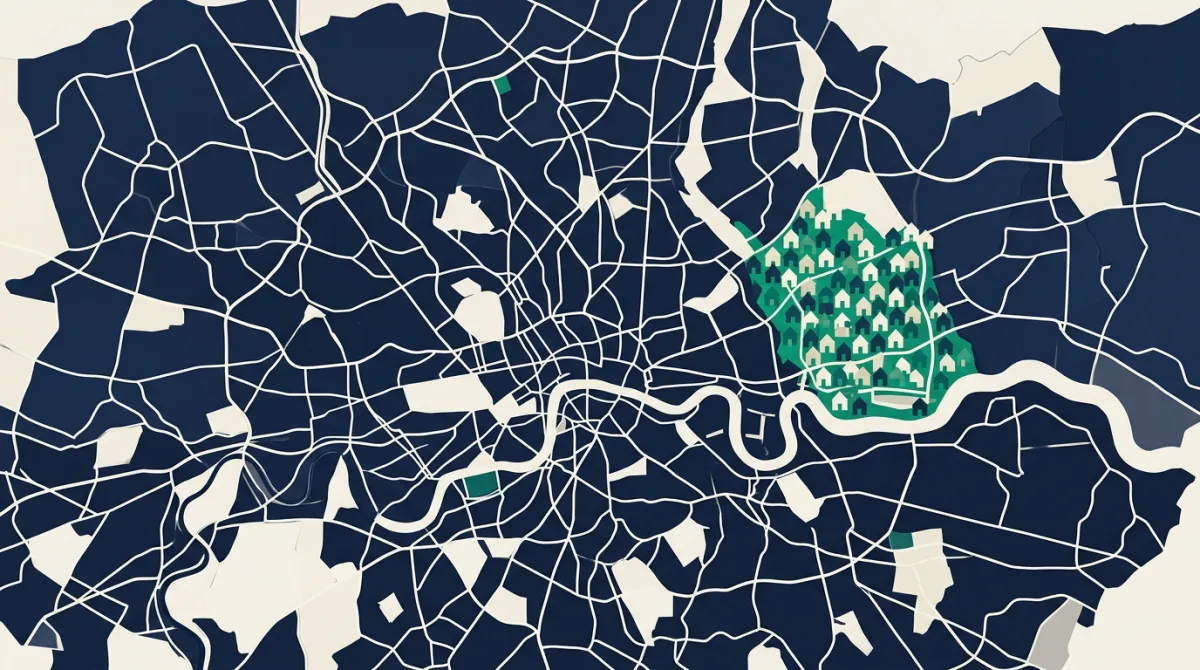
The excitement around this single match, in a single place, draws attention to how people cluster together in different parts of the country. Postcode data provides a numerical lens on that clustering. The postcode district E12, covering part of east London, holds the title of most crowded in the UK, with roughly 31.6 households sharing each individual postcode. That figure means a single postcode in E12 often serves dozens of front doors, tower blocks, terraces and flats where many families live in close proximity.
If every person expected at the village replay lived in E12, they would almost certainly fill only a small number of postcodes. The contrast is striking, but it also highlights how the idea of a “local” community shifts. In a crowded urban district, a postcode might encompass enough people to fill a football ground several times over. Yet those residents might not share the same immediate bond that a village club enjoys with its smaller, more dispersed supporter base.
For the village hosting this replay, the record crowd is a measure of extraordinary unity. Supporters are travelling from surrounding hamlets and towns, drawn by the sense of injustice and the chance to witness a potential upset. Their postcodes, scattered across a rural or semi-rural landscape, likely contain far fewer households than E12. While precise figures for that area are not included here, the E12 benchmark puts the numbers into perspective. The same FA decision that brought a community together in one place would, in a district like E12, potentially touch an even larger audience within a single postcode footprint.
The cup replay is about more than football; it is about identity and belonging. Postcode districts like E12 show that density does not always dilute identity, it can intensify it, with schools, businesses and clubs all competing for attention in a compact area. The village club, meanwhile, is experiencing a brief moment where its identity blazes far beyond its usual catchment. Whether the record crowd converts into lasting support remains to be seen, but the postcode data reminds us that community comes in many forms, from the tightly packed streets of London to the lanes of a village football ground.
The data behind this
The household density figure for E12 comes from Postcodes UK’s own analysis of residential address records matched to Royal Mail postcode data. The count of households sharing each postcode is calculated by dividing the number of residential delivery points by the number of unique postcodes in the district. This dataset offers a snapshot of urban crowding but does not capture commercial properties or single-occupancy businesses. For further details on how postcode density is measured across the country, visit our methodology page.
In response to reporting by BBC England. Analysis and figures by Postcodes UK.